What is a Waterproof Lithium Battery and How Does It Work?
The demand for reliable energy sources is growing. Waterproof Lithium Batteries are emerging as a vital solution. According to a recent report by Markets and Markets, the global lithium battery market is expected to reach $100 billion by 2025. This surge is driven by increased usage in electronics and electric vehicles.
Waterproof Lithium Batteries are designed for durability. They can withstand harsh environmental conditions. This makes them ideal for outdoor devices, marine applications, and wearables. Statistics show that the outdoor gear market is projected to grow by 9% annually. As more consumers seek versatile solutions, the role of waterproof batteries becomes critical.
However, not all products meet industry standards. Quality and performance can vary significantly among manufacturers. Users should consider this when selecting a Waterproof Lithium Battery. It is vital to choose a reliable brand that prioritizes safety and efficiency. Balancing performance and practicality is a challenge that the industry must address.
What is a Waterproof Lithium Battery?
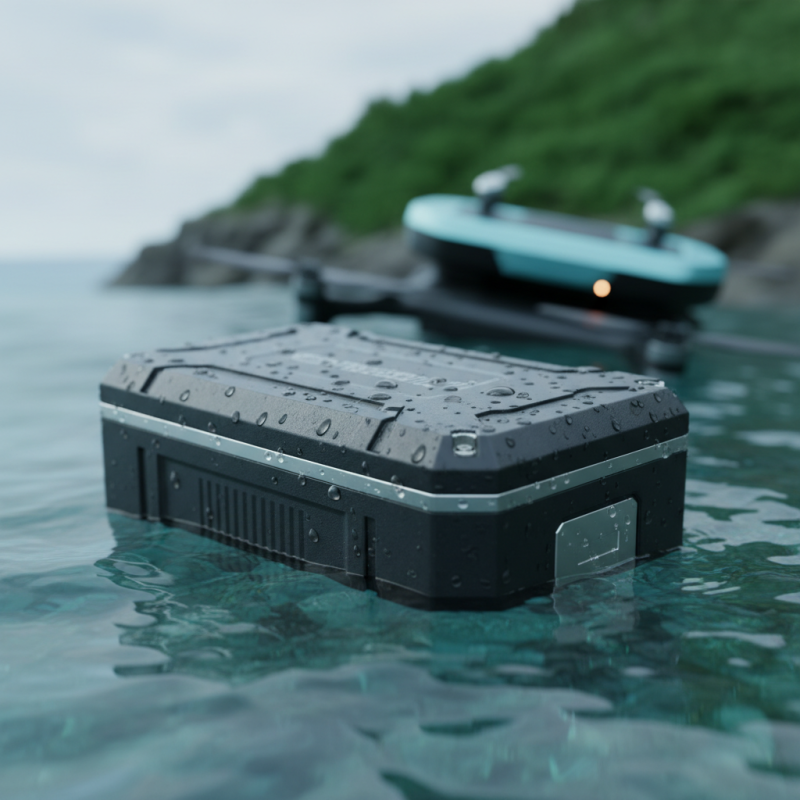
A waterproof lithium battery is designed to withstand exposure to water and moisture. These batteries often use special coatings and sealing methods to prevent water ingress. This feature is crucial for devices used outdoors or in wet environments, ensuring reliability under various conditions.
When selecting a waterproof lithium battery, consider the IP rating. This rating indicates the level of protection against dust and water. For instance, an IP67 rating means the battery can withstand being submerged in water up to one meter for 30 minutes. However, not all waterproof batteries are created equal, and performance can vary based on brand and technology.
Tips: Always check manufacturer details for specifications. Storage and charging conditions are vital. Avoid leaving batteries in humid places. Be cautious of prolonged exposure to water, even with waterproof models. Regular inspection can prevent unseen damage.
Key Features of Waterproof Lithium Batteries
Waterproof lithium batteries are designed to withstand harsh environmental conditions. Their key features include resistance to moisture and corrosion. This makes them ideal for outdoor applications. They protect sensitive electronic components, ensuring reliable performance.
According to industry reports, waterproof lithium batteries can achieve an IPX7 rating. This rating indicates the battery can be submerged in water up to one meter for 30 minutes without damage. This durability is crucial for consumers seeking long-lasting power in challenging environments. Additionally, their lightweight design enhances portability without sacrificing efficiency.
However, challenges remain. Some users report issues with compatibility in extreme heat or cold. Moreover, the cost of waterproof batteries is typically higher. This raises concerns for budget-conscious consumers. The balance between performance and price must be carefully evaluated. Yet, the benefits, especially for outdoor enthusiasts and professionals, often outweigh the drawbacks.
What is a Waterproof Lithium Battery and How Does It Work? - Key Features of Waterproof Lithium Batteries
| Feature |
Description |
Benefits |
| Water Resistance Rating |
Typically rated IP67 or IP68, meaning they can withstand submersion in water |
Enhanced durability in wet environments |
| Temperature Range |
Operates efficiently in a wide temperature range, often from -20°C to 60°C |
Reliable performance in various climate conditions |
| Cycle Life |
Can last between 500 to 3000 charge cycles depending on usage |
Cost-effective and long-lasting solution |
| Weight |
Lightweight compared to lead-acid batteries, generally 20-30% less |
Easier to handle and install, increasing equipment mobility |
| Charging Speed |
Allows for rapid charging, often within 1-2 hours |
Reduced downtime for devices and machines |
| Safety Features |
Includes built-in protections against overheating, overcharging, and short-circuiting |
Increased user safety and reduced risk of accidents |
Benefits of Using Waterproof Lithium Batteries
Waterproof lithium batteries offer significant advantages for various applications. Their construction allows them to withstand moisture and exposure to water. This makes them ideal for outdoor devices, marine equipment, and even some automotive applications. Users benefit from enhanced reliability. Events such as sudden rain won't compromise device performance.
Additionally, waterproof lithium batteries are often lightweight yet durable. This combination is particularly valuable for portable electronics. People enjoy longer usage times without worrying about battery failure. These batteries can operate in extreme conditions. However, some might question the initial investment. Waterproof options can be pricier. It's a trade-off for long-term durability.
Many industries find these batteries indispensable. They provide peace of mind for those who work in harsh environments. Yet, the technology is still evolving. Manufacturers must continue to improve efficiency and reduce costs. Consumers should stay informed about advancements. Balancing performance and price remains a challenge for manufacturers. But the benefits of waterproof lithium batteries are clear.
Applications of Waterproof Lithium Batteries
Waterproof lithium batteries find applications in many fields. These batteries are crucial in devices exposed to moisture or harsh environments. They are often used in marine electronics, outdoor devices, and sports equipment. The ability to withstand water enhances their usability in adventure sports and underwater exploration. This feature makes them vital for divers, sailors, and outdoor enthusiasts.
In the automotive sector, waterproof lithium batteries power electric vehicles. Their resistance to water damage ensures reliability. This is especially important for vehicles in rainy or snowy conditions. The use of these batteries supports longer life cycles and better performance in challenging climates.
Tips: Always check the waterproof rating. It’s crucial for ensuring safety. Regular maintenance can extend battery life. Be mindful of temperature and humidity levels. These can impact performance. Not all waterproof features are equal. Test them under real conditions when possible.
How Waterproof Lithium Batteries Work in Various Conditions
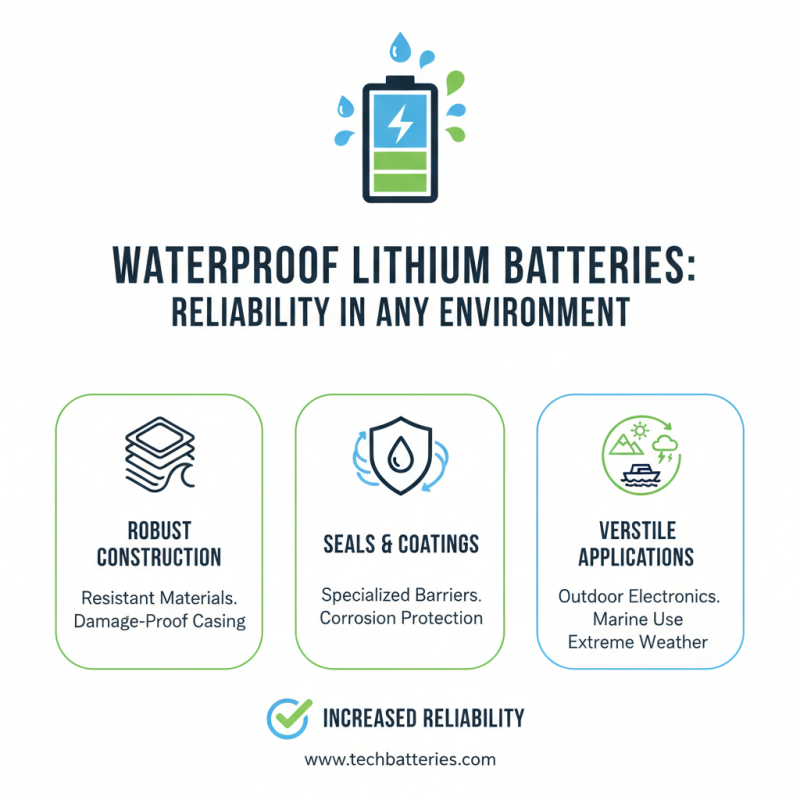
Waterproof lithium batteries are designed to function in various environments. Their construction includes robust materials that resist water damage. Commonly, these batteries have specialized seals and coatings. This makes them suitable for electronics used outdoors, in marine applications, or even in extreme weather. Users benefit from increased reliability in these conditions.
Not all waterproof batteries are equal. Different environments pose unique challenges. For example, exposure to saltwater requires specific corrosion-resistant features. Similarly, submerged conditions might demand higher waterproof ratings. Paying attention to these factors is essential.
**Tips:** Always check the battery's waterproof rating before purchase. Conduct regular inspections for wear and tear. Remember, even waterproof batteries can degrade over time. Keep track of battery performance in challenging environments to avoid surprises. You can never be too cautious.