China has become an important source of solar equipment, with manufacturers serving residential, commercial, and off-grid projects. Yet choosing a Solar Voltage Regulator is not just a matter of comparing prices or reading a product label. System voltage, battery chemistry, rated current, temperature range, and protection features all affect whether a unit suits a real installation. A mismatch can reduce performance or shorten battery life. Small details matter.
This guide introduces ten solar voltage regulator manufacturers in China and offers a practical starting point for evaluating them. It considers product range, technical documentation, manufacturing focus, customization options, and the availability of after-sales support. These factors help buyers form better questions before requesting quotations or samples. Specifications should be checked against the intended system, rather than assumed from a supplier’s general catalog. That step is easy to overlook.
Manufacturer information and product lines can change, and a company’s market presence does not prove that every model fits every project. Readers should verify current datasheets, destination-market certifications, warranty terms, and testing procedures directly with each supplier. Where public details are limited, that uncertainty deserves attention, not guesswork. The list is a comparison aid, not a substitute for engineering review. A careful selection starts with the load, battery, and site conditions—and leaves room to revise assumptions when better evidence appears. That is the more reliable approach.

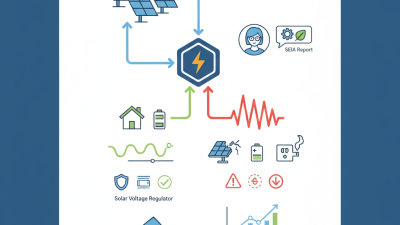
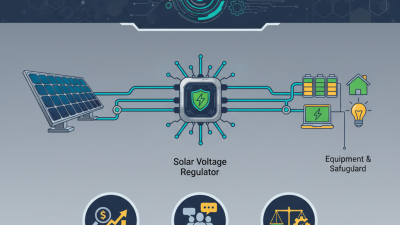
In a photovoltaic system, a solar voltage regulator—often called a charge controller—manages power flowing from panels to a battery. Panel output changes with sunlight, temperature, and shade. The regulator helps keep charging within the battery’s specified limits, reducing the risk of overcharging. That matters.
Many controllers use pulse-width modulation or maximum power point tracking. The first is often simpler; the second can adjust panel operation to capture more available energy. Actual performance depends on system design and conditions, not just the controller label. A cloudy afternoon can change the numbers.
A regulator may also provide low-voltage load disconnection, temperature monitoring, or reverse-current protection. These features vary, so installers should check the manual and match ratings to the panel array and battery chemistry. Cable length and connector quality matter too. Small details count. A controller does not replace an inverter, which converts battery power for many household appliances. It is also not a substitute for sound wiring and appropriate protective devices. I find this distinction easy to overlook when comparing equipment: the regulator is one part of a coordinated system, and poor sizing can limit the whole installation.

Solar voltage regulators control the power flowing from photovoltaic panels to a battery. These illustrative targets vary by battery design, temperature, and manufacturer guidance. Equalization is appropriate only for battery types whose manufacturers permit it.
China’s solar voltage regulator manufacturers serve systems ranging from small rooftop arrays to off-grid installations. Product claims should match real operating conditions. IRENA’s Renewable Capacity Statistics 2024 reports 346 GW of global solar additions in 2023. That growth brings varied climates, battery types, and installation demands.
Compare continuous current ratings, peak loads, operating temperatures, and battery compatibility. Ask whether ratings were tested at high ambient temperatures, not just in a cool laboratory. For battery charge controllers, request relevant test reports; IEC 62509 covers performance and functioning for controllers used with lead-acid batteries. Check protection against reverse polarity, overcurrent, and overheating. A polished brochure is not proof. Review traceable test records, component controls, calibration procedures, and warranty terms. If possible, inspect a production line and sample a finished unit. Even then, one visit cannot reveal every weakness.
Tips: Request the exact test conditions behind each rating. Confirm the delivered model matches the tested sample. Check whether replacement parts and technical support are realistically available. A low quote can still cost more after repeated failures.
| No. | Evaluation Dimension | Useful Reference | How to Verify | Why It Matters |
|---|---|---|---|---|
| 1 | Controller Type and Conversion Performance | Confirm whether the unit uses PWM or MPPT. For MPPT models, compare the manufacturer’s stated tracking and peak conversion efficiencies; results vary by model and operating conditions. | Request the model-specific datasheet and test conditions. Compare independent test reports where available. | MPPT and PWM controllers operate differently, so efficiency figures should only be compared on a like-for-like basis. |
| 2 | Rated Battery Voltage and Current | Check supported battery-system voltages, such as 12 V, 24 V, or 48 V, and the rated charging current for the exact model. | Match the nameplate and datasheet to the intended battery bank and PV-array design. Check any derating at high ambient temperatures. | An incorrect voltage or current rating can cause poor charging performance or equipment damage. |
| 3 | PV Input Limits | Check the maximum PV open-circuit voltage and maximum PV input current or power specified for the model. | Ask the supplier to confirm compatibility with the proposed module string, including the cold-weather increase in open-circuit voltage. | Exceeding the controller’s input limits may damage it; PV voltage can rise as module temperature falls. |
| 4 | Battery Chemistry and Charge Settings | Confirm support for the required chemistry, such as lead-acid or lithium-ion, and whether charge voltages and protection settings are configurable. | Request the charging profile, configuration guide, and documented compatibility requirements for the selected battery. | Correct charge settings help protect the battery and support its expected service life. |
| 5 | Protection and Operating Limits | Review documented protection against reverse polarity, overcurrent, overtemperature, and excessive battery or PV voltage, as applicable to the design. | Ask for the protection list, operating-temperature range, and test evidence for the specific model. | Protection features reduce the risk of faults during installation and operation, but should not replace correct system design. |
| 6 | Applicable Safety and EMC Compliance | Identify the standards and regulatory requirements that apply to the product and destination market. IEC 62509 addresses battery charge controllers for photovoltaic systems. | Request certificates and complete test reports showing the model number, issuing laboratory, test standard, and report date. Verify documents with the issuer where possible. | Compliance needs depend on product design and market; a generic certificate may not cover the exact model being purchased. |
| 7 | Quality Management and Production Controls | Look for documented incoming inspection, assembly controls, calibration, and final testing. A quality-management certificate alone does not establish product performance. | Review relevant audit records and sample production test reports; arrange an independent factory audit when appropriate. | Consistent manufacturing controls help reduce variation between samples and delivered production units. |
| 8 | Product Testing and Traceability | Check that each unit or production batch can be traced to a model, serial number, and test record. | Request a sample inspection report and confirm that serial-number records connect to production and final-test data. | Traceability makes it easier to investigate defects and manage warranty or corrective actions. |
| 9 | Communication and System Integration | Confirm the actual interfaces and protocols offered, such as RS-485 or CAN, if required by the system. Protocol support is model-specific. | Request interface documentation and test communication with the intended battery, inverter, or monitoring platform before bulk ordering. | Matching interfaces and protocols is essential for reliable monitoring and coordinated system operation. |
| 10 | Warranty, Service, and Spare Parts | Compare the written warranty period, exclusions, claim process, service response arrangements, and spare-parts availability. | Review the warranty terms and obtain written confirmation of service responsibilities, repair arrangements, and expected support times. | Clear after-sales terms help control maintenance costs and downtime over the product’s service life. |
| Note: This table provides practical evaluation criteria, not a verified ranking or certification of individual manufacturers. Performance values and compliance requirements vary by model and target market; verify all specifications against current, model-specific documentation. | ||||
These ten profiles highlight different strengths found among Chinese solar voltage regulator manufacturers; they are comparison points, not a verified ranking. One focuses on compact PWM units for small cabins, while another develops MPPT controllers for larger battery banks. A third offers metal-cased regulators suited to dusty equipment rooms. A fourth emphasizes clear LCD readings, and a fifth provides configurable settings for different battery chemistries. Small details matter.
The remaining profiles reflect other practical needs. One manufacturer specializes in high-current models for off-grid systems. Another supports custom connectors and cable lengths. One prioritizes heat management, using roomy enclosures and visible ventilation slots. A ninth focuses on wholesale production, while the tenth offers documentation and technical support for system integrators. These descriptions should not replace product testing. Check rated voltage, current limits, temperature range, and protection features against your actual installation. Supplier claims can vary, and specifications may change between product revisions.
Tips: Request a current datasheet and wiring diagram. Confirm compatibility with your panels and batteries, then ask how warranty claims and technical questions are handled.
A useful comparison of China’s leading ten solar voltage regulator manufacturers starts with controller type. PWM units suit small, cost-sensitive systems where panel and battery voltages closely match. MPPT units convert higher panel voltage into battery charging current, making them useful for larger arrays and variable weather. The IEA PVPS Snapshot of Global PV Markets 2024 reports more than 1.6 terawatts of cumulative solar capacity worldwide by the end of 2023. That scale makes clear why product specifications matter.
Compare rated charge current, maximum PV open-circuit voltage, battery compatibility, and support for 12-, 24-, or 48-volt systems. For a cabin lighting setup, a compact PWM regulator may be adequate. A telecom site or farm pump may need MPPT, higher current capacity, and thermal protection. Check enclosure ratings too, especially where dust or rain reaches the mounting area. Small details matter.
Peak figures can mislead. A common comparison trap is judging units by maximum amps alone. Heat can reduce output, while oversized panels can exceed the voltage limit. The IEA PVPS report describes a fast-growing market, but it does not establish how any particular regulator performs. Buyers should compare test conditions, warranty terms, and clear derating data; many datasheets leave the last point frustratingly vague.
China’s solar voltage regulator industry is evolving alongside rooftop solar, off-grid projects, and energy storage. Buyers increasingly look for stable output across changing sunlight, not simply a low purchase price. On a cloudy morning, panel voltage can fluctuate quickly; reliable regulation helps protect batteries and connected equipment. Some systems also need communication features for remote monitoring, though these add cost and setup work.
Product development is moving toward smarter controls, clearer fault alerts, and better compatibility with different battery types. Integration matters: a regulator must work with the panels, batteries, inverter, and expected load. Suppliers are also paying closer attention to heat management and protection against overcurrent. Small details count. A poorly ventilated enclosure in a hot utility room can shorten component life. Yet feature lists do not always prove real-world performance, and buyers should check test conditions carefully.
Tips: Confirm the controller’s voltage and current ratings against your actual array. Ask how it behaves during high temperatures and low sunlight. Review wiring guidance and warranty terms before installation. A neat display is useful, but it cannot replace sound sizing. Even experienced teams can overlook a mismatch when project requirements change late.