How to Choose the Best 5 Kw Inverter for Your Needs?
Choosing the right inverter is critical for your energy needs. An "Inverter 5 Kw" provides sufficient power for many applications. Understanding your requirements helps narrow down the options.
When selecting an inverter, consider efficiency, reliability, and user reviews. Look for brands with a robust reputation. Take the time to explore performance metrics and consumer feedback.
Potential buyers often overlook the importance of durability. Low-quality inverters might save money initially but cost more in the long run. A balance between cost and quality is essential. Reflect on your specific needs to ensure you invest wisely.
Understanding Inverter Basics: What is a 5 Kw Inverter?
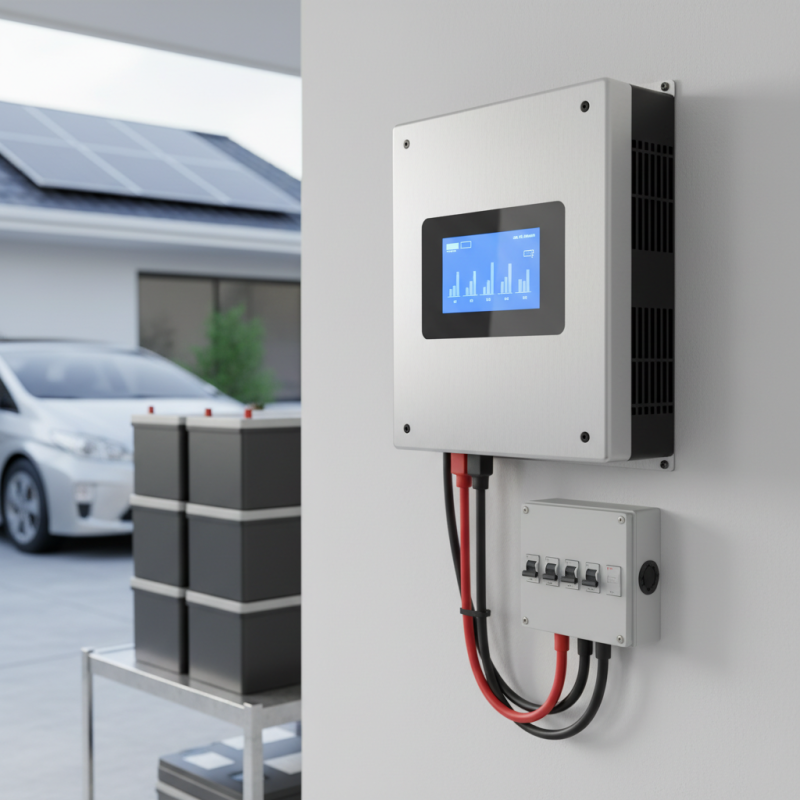
Understanding inverter basics is crucial for anyone considering a 5 kW inverter. A 5 kW inverter is a device that converts direct current (DC) to alternating current (AC). This is essential for powering household appliances and other electrical loads. It typically supports small to medium-sized systems. You can use it with solar panels, batteries, or other energy sources.
When selecting a 5 kW inverter, you should assess your specific needs. Every home has different energy demands. Some households require more energy during peak hours. This can affect the inverter's efficiency and performance. Considering factors like surge capacity is essential. This indicates how much power the inverter can handle during brief spikes. Not all inverters are built the same. Quality varies, and reliability is critical.
Moreover, some users overlook the importance of installation and compatibility. An inverter must work seamlessly with your existing setup. Incorrect installation can lead to malfunctions or inefficiencies. Additionally, it can be worthwhile to explore customer reviews for more insights. Understand the common challenges faced by users. Some may encounter issues related to noise or heat generation. Recognizing these aspects enables informed choices.
How to Choose the Best 5 Kw Inverter for Your Needs?
| Feature |
Description |
Importance Level |
| Power Output |
Ensure the inverter can handle your total load of appliances. |
High |
| Efficiency |
Choose an inverter with high efficiency to minimize energy losses. |
High |
| Type of Inverter |
Consider string inverters vs. micro-inverters based on your system setup. |
Medium |
| Size |
The physical size of the inverter should fit your space requirements. |
Low |
| Warranty |
Longer warranties typically indicate better reliability. |
High |
| Safety Features |
Look for inverters with built-in safety mechanisms to protect your system. |
High |
Key Features to Consider When Selecting a 5 Kw Inverter
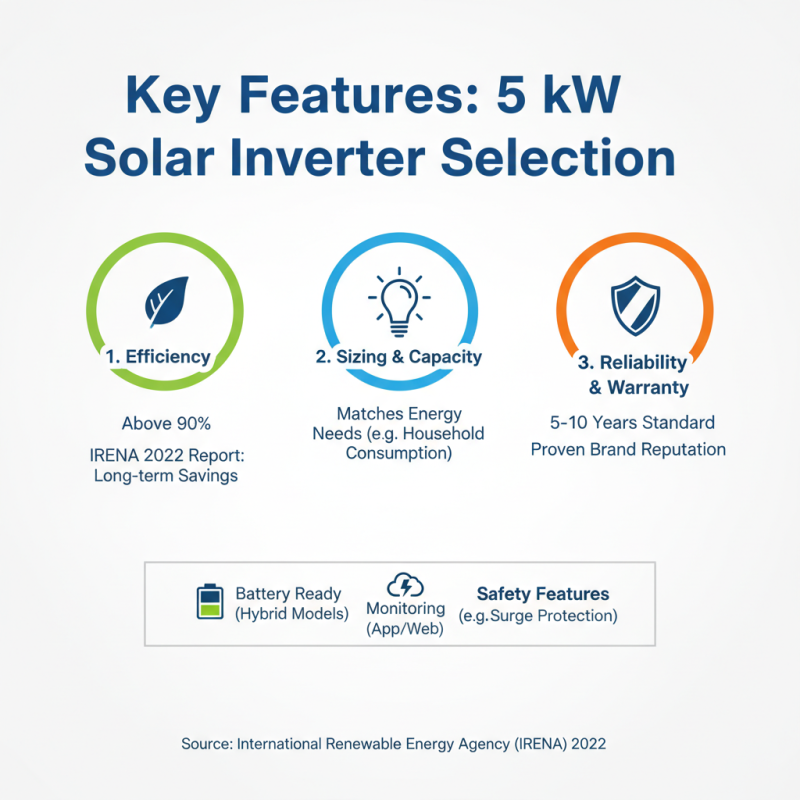
When choosing the best 5 kW inverter, certain key features should guide your decision. Efficiency is paramount. Look for models with an efficiency rating above 90%. According to a 2022 report by the International Renewable Energy Agency (IRENA), even small differences in efficiency can lead to significant energy savings over time. Ensure the inverter’s specifications align with your energy consumption needs.
Another important consideration is the inverter's ability to cope with variations in power loads. This adaptability is crucial for homes with fluctuating energy demands. For example, a report from the National Renewable Energy Laboratory (NREL) highlights that a robust inverter should handle peak load conditions without failure. Pay attention to the inverter's surge capability. This feature ensures it can manage temporary, high-power demands.
Moreover, consider the safety features integrated into the inverter. Look for automatic shut-off, overload protection, and cooling systems. These elements contribute to the reliability and longevity of your investment. Despite advancements in technology, some inverters may still falter under extreme conditions, leading to potential energy losses. Regular assessments of inverter performance can mitigate this risk.
Assessing Your Power Needs: Calculating Required Inverter Capacity
When selecting a 5 kW inverter, assessing your power needs is crucial. Begin by calculating the total wattage of devices you plan to power. Consider appliances like refrigerators, televisions, or tools. Each device has a unique power requirement.
To make an accurate assessment, list all appliances and their wattage. Add extra capacity for surge power. This is the power required during startup. For example, some motors need twice the running wattage initially.
Tips: Keep your list organized. Include all device specifications. Use online calculators to verify your estimates.
Think about future needs. Your power requirements may grow over time. Consider potential new devices you might add.
Another key element is evaluating energy efficiency. Inverters can waste energy during conversion. Select models with good efficiency ratings. This will help you save on electricity bills.
Reassess your power consumption regularly. Habits can change, leading to more or less demand. Be open to adjustments. This ensures your inverter serves you well for years.
Evaluating Different Types of 5 Kw Inverters Available
When exploring the various types of 5 kW inverters, it's crucial to understand their core differences. There are mostly three types: string inverters, microinverters, and hybrid inverters. As reported by the National Renewable Energy Laboratory, string inverters dominate the market, representing about 70% of installations. They work best in environments with minimal shading and are generally more cost-effective.
Microinverters, on the other hand, offer advantages in shading scenarios. They operate independently at each panel level, maximizing energy output. However, they come with a higher price tag, often discouraging some users. According to a recent industry report from Bloomberg, microinverters gained popularity, particularly among residential buyers focusing on efficiency.
Hybrid inverters combine features of both string and battery inverters, catering to those looking for storage solutions.
When selecting an inverter, it's essential to reflect on your specific needs. The choice of inverter impacts energy efficiency, installation costs, and future scalability. Think about whether you plan to expand your solar system. Some inverters may not support such upgrades easily. This decision can lead to hidden costs later.
Choosing the right inverter is not merely a technical consideration; it requires thoughtful evaluation of your long-term energy goals and personal financial situation.
Comparing Costs and Warranties for Optimal Value
When selecting a 5 kW inverter, cost and warranty are crucial factors to consider. The price range for 5 kW inverters can vary significantly. You might find units from budget-friendly options to high-end models. A lower price doesn't always mean lower quality, but it can be tempting to go with the cheapest option. Evaluating what is included in the price is essential. Features might differ greatly.
Warranties can also provide insight into the inverter's reliability. A longer warranty often indicates greater confidence from the manufacturer. It is common to see warranties ranging from one to ten years. Be cautious, though. A long warranty doesn’t guarantee that the inverter will perform well throughout its life. Some products with shorter warranties may still excel if they are backed by a known track record of reliability.
Research online reviews and compare user experiences. Real-world feedback can reveal issues you might not foresee. Look for patterns in the reviews; they can highlight hidden costs related to repairs or replacements. Balancing the warranty period with user satisfaction can guide you. Ultimately, choosing the right inverter is not just about immediate costs but long-term value.