How to Choose the Best 5 Kw Inverter for Your Needs?
Choosing the right inverter is crucial for efficiency and performance. The "Inverter 5 Kw" market has seen significant growth. According to a recent report from the Solar Power Association, the demand for inverters is expected to increase by over 15% annually. This data underscores the importance of selecting the best options for your energy needs.
Industry expert Dr. Emily Collins, a leading researcher in renewable energy systems, states, "Investing in the right inverter can significantly enhance the overall system efficiency." Her insights reflect the importance of understanding your specific requirements. Various models come with different features. Assessing these can be overwhelming but is essential for long-term satisfaction.
Many users overlook critical components when choosing an inverter. Features like efficiency rating, load capacity, and warranty can impact your decision. Each of these elements plays a role in maximizing performance. As the market evolves, staying informed about advancements is key. The right choice is not always obvious, and reflection on your needs will lead you to better outcomes.

Understanding the Basics of 5 Kw Inverters
When considering a 5 kW inverter, it's essential to understand its basic functions. A 5 kW inverter converts DC electricity from batteries into AC electricity for household use. This process allows you to power various devices efficiently. Knowing this helps you assess your energy needs and make informed decisions.
Different types of inverters exist, including pure sine wave and modified sine wave options. Pure sine wave inverters are often recommended for sensitive electronics. They provide a stable power output, reducing the risk of damage. In contrast, modified sine wave inverters might work for simpler appliances, but can lead to inefficiency and wear over time.
Understanding your specific needs is crucial. Calculate your total energy consumption. Consider peak loads and running times. Evaluate how much energy you regularly use. Many people neglect this step, leading to mismatched choices. An inverter that is too small will strain under heavy loads. One that is too large may be unnecessary and waste energy. Adjustable settings and features are also worth considering.
Power Output Comparison of 5 kW Inverters
This chart showcases the key specifications of a typical 5 kW inverter, including efficiency, surge power, weight, and dimensions. This information can assist in choosing the best inverter for your specific needs.
Key Features to Look for in a 5 Kw Inverter
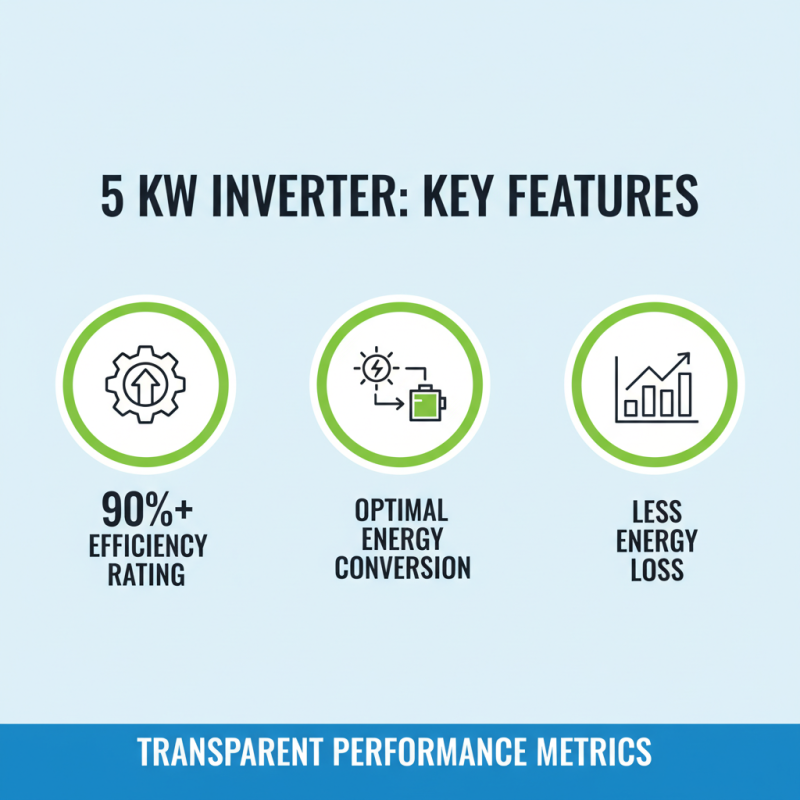
When selecting a 5 kW inverter, key features play a vital role in ensuring it meets your energy needs. One essential aspect is the inverter's efficiency rating. A higher efficiency means less energy loss during conversion. Most modern inverters achieve about 90% efficiency or more. Look for models that clearly state their efficiency metrics. This provides transparency and helps you gauge performance.
Another critical feature is the inverter's capability to handle peak loads. Many appliances require more power at startup than during typical operation. Verify that the inverter can manage these surges without issues. Additionally, consider the number of input and output ports. More options offer flexibility for connecting multiple devices.
Durability and heat management are often overlooked but crucial. An inverter that runs too hot can lead to premature failure. Check for built-in cooling features or high-temperature ratings. Lastly, read user reviews. They can offer real-world insights, highlighting both strengths and weaknesses of specific models. Sometimes, even top-rated inverters might have quirks that require adjustment. Balancing these details ensures you make a well-informed decision.
Evaluating Your Power Needs and Usage Scenarios
Choosing the right 5 kW inverter can significantly impact your power supply. Evaluating your power needs is crucial before making a decision. Start by identifying your energy consumption. Consider the appliances you use daily. Everyone’s needs differ, and knowing your requirements will guide you in the right direction.
Tips: List essential devices and their wattage. Calculate the total wattage. Ensure your inverter can handle peak demands during usage.
Next, consider your usage scenarios. Do you need power for a home, an RV, or a remote location? Each situation requires a different approach. For instance, continuous load versus intermittent load can change your choice dramatically. Pay attention to where you will use it most and select accordingly.
Tips: Think about accessibility and portability. Some users benefit from compact designs for easy transport. Also, check how much maintenance is necessary; this can affect long-term satisfaction. Reflect on the inverter's noise level, especially for residential use.
Comparing Different Brands and Models of 5 Kw Inverters
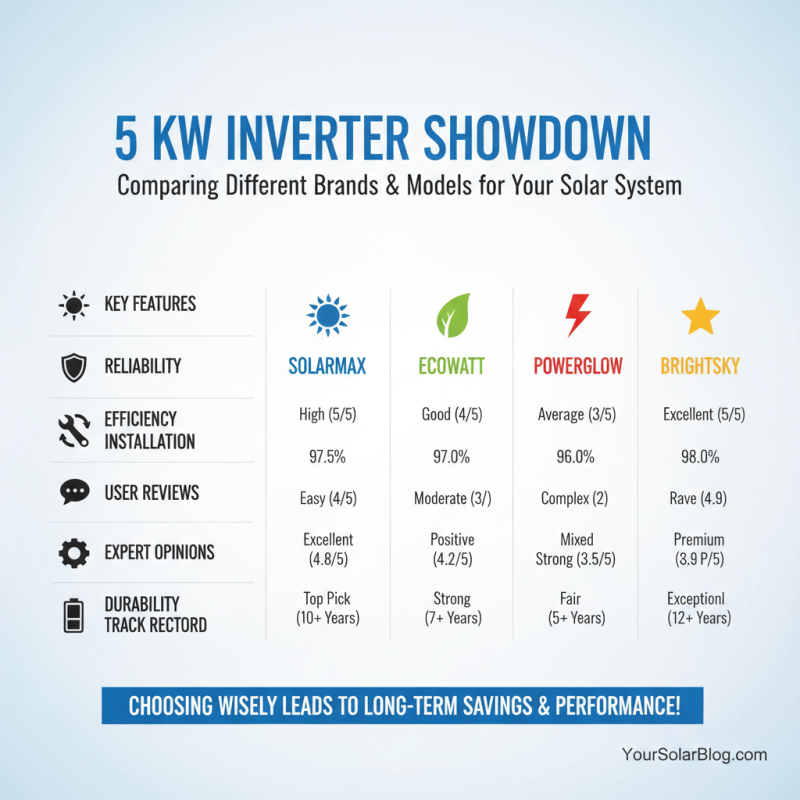
When selecting a 5 kW inverter, comparing different brands and models is essential. Each brand offers unique features that cater to specific needs. Look for reliability, efficiency, and ease of installation. Evaluate user reviews and expert opinions to gain insight into each model's performance. Prioritize inverters with a strong track record for durability.
Tips: Check the warranty period offered by manufacturers. A longer warranty suggests confidence in product quality. Research the service provision in your area to ensure support is accessible if needed.
Inverter technology varies significantly. Some models are designed for off-grid use, while others are suited for on-grid applications. Knowing your usage scenario helps narrow down your choices. Have you considered the noise level? Some inverters can be quite loud during operation. A quieter model may enhance your living environment.
In addition to basic functions, look for additional features. Smart technology integration allows for better monitoring and function control. Be cautious, as overly complicated features might not always enhance usability. Investing time in understanding your specific needs can prevent future dissatisfaction.
Tips for Installation and Maintenance of Your Inverter
When installing a 5 kW inverter, proper attention to detail is crucial. Start by selecting an appropriate location that’s dry and well-ventilated. This placement can significantly improve the inverter’s efficiency and lifespan. According to industry reports, an inverter’s temperature should not exceed 75°C for optimal performance. A suction fan might help maintain a cooler environment. Routine checks can reveal issues early.
Wiring is another critical aspect of installation. Ensure that all connectors are properly tightened. Loose connections can lead to overheating. A report by the International Energy Agency suggests that improper wiring is responsible for 30% of inverter failures. Regular inspection of cables for wear and tear contributes to safety and reliability.
Maintenance involves periodic cleaning and monitoring. Dust buildup can obstruct airflow, hence regular dusting is essential. Keeping a log of maintenance activities helps track performance over time. While some might overlook these details, they can lead to significant problems later. Addressing these issues promptly supports the longevity of your inverter system.
How to Choose the Best 5 Kw Inverter for Your Needs? - Tips for Installation and Maintenance of Your Inverter
| Feature |
Importance |
Recommendations |
| Output Power |
Essential for matching your energy needs. |
Ensure the inverter can handle at least 5 kW. |
| Efficiency Rating |
Higher efficiency means less energy loss. |
Look for an efficiency rating above 90%. |
| Type of Inverter |
Determines compatibility with your solar system. |
Consider string or micro-inverters based on system size. |
| Input Voltage |
Must match your solar panel output. |
Commonly 48V or 60V; verify panel specs. |
| Safety Features |
Protects the system and users. |
Look for overvoltage, overcurrent, and thermal protections. |
| Warranty |
Longer warranty indicates better quality assurance. |
Aim for at least 5-10 years warranty period. |
| Installation Requirements |
Impacts ease of setup and performance. |
Ensure a professional installation if required. |
| Maintenance Needs |
Regular maintenance extends inverter life. |
Check connections and clean regularly. |