What is a 120 240 Split Phase Inverter and How Does It Work?
The 120 240 Split Phase Inverter is a critical component in modern electrical systems. It allows users to utilize both 120V and 240V outputs from a single power source. This capability is especially handy for homes that require different voltage levels for various appliances.
Understanding how the 120 240 Split Phase Inverter works is essential for homeowners and electricians alike. It operates by converting direct current (DC) into alternating current (AC). Users often install these inverters for renewable energy systems, like solar panels. However, the setup can be complex and may require professional assistance.
Many find themselves confused when choosing the right inverter. The market offers various models, but not all suit every need. Moreover, ongoing maintenance can be challenging. This forces users to confront their level of knowledge about electrical systems. As technology advances, so do the options and features available. Managing these changes can be overwhelming for some.
What is a 120/240 Split Phase Inverter?
A 120/240 split phase inverter is crucial in managing residential power. It converts direct current (DC) into alternating current (AC) for home appliances. This inverter operates on two voltage levels, 120 volts and 240 volts. Many homes in the U.S. rely on this split-phase system, particularly for larger appliances like dryers and ovens. According to the U.S. Energy Information Administration, about 60% of households utilize this setup for their electrical needs.
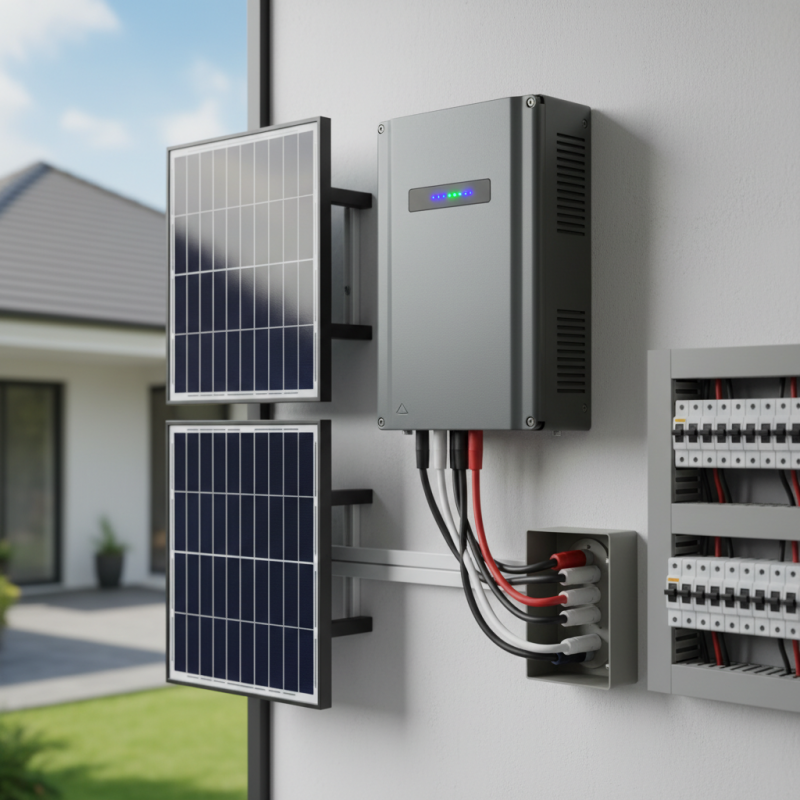
Understanding how it works is essential. The inverter takes power from batteries or solar panels, converting it to usable AC. This conversion allows appliances to run efficiently. It utilizes two transformers to deliver both voltage levels, enabling various devices to operate simultaneously. Reports indicate that proper installation can improve efficiency by up to 30%.
Tips for using a 120/240 split phase inverter include ensuring correct wattage ratings and regular maintenance. Monitor the inverter's load regularly. Overloading can damage your system. Investing in a surge protector can also be wise. This avoids power spikes that may harm sensitive electronics. Maintaining clear ventilation around the inverter ensures optimal performance, especially in warmer climates.
Performance of a 120/240 Split Phase Inverter
This chart displays the efficiency and energy output of a typical 120/240 split phase inverter across different load conditions.
Components of a 120/240 Split Phase Inverter
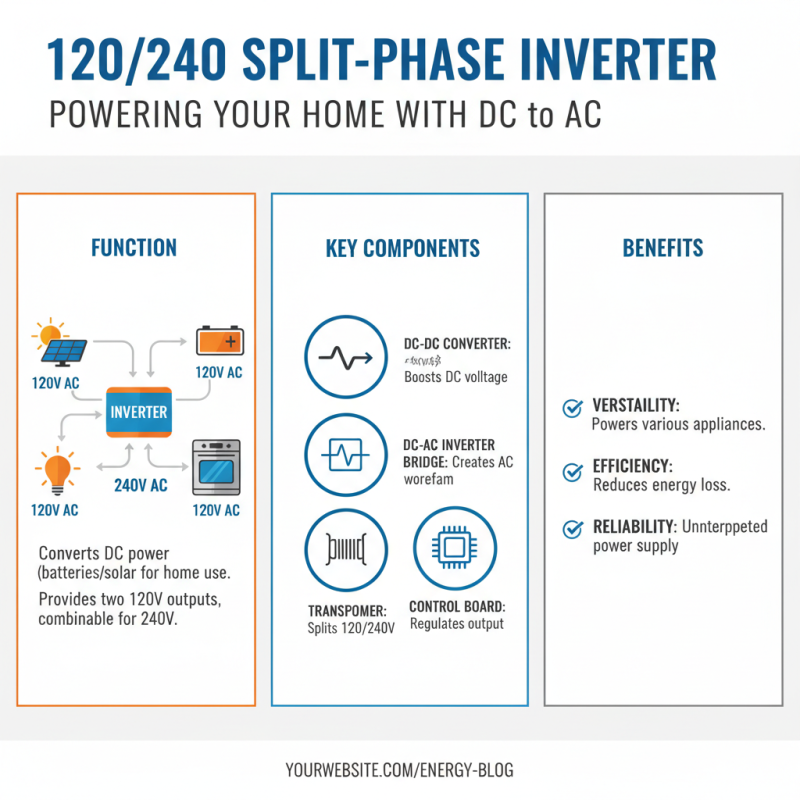
A 120/240 split phase inverter is a device widely used in energy systems. It converts DC power from batteries or solar panels into AC power for home use. This inverter provides two 120V outputs, which can be combined for a 240V output. The components of this inverter are crucial for its functionality.
Key components include the power stage, control circuit, and transformer. The power stage consists of transistors switching rapidly to convert DC to AC. Control circuits regulate the output voltage and frequency. A transformer then steps up the voltage for 240V needs. This design allows efficient energy distribution across the home.
Tips for choosing an inverter include considering power rating and efficiency. Check the specifications. Ensure your inverter meets daily energy needs without strain. Pay attention to safety features like overload protection. Also, installation location matters. Place it in a cool, dry area for optimal performance. These details can significantly affect the inverter's lifespan and efficiency. Don't overlook small details; they matter.
How Does a 120/240 Split Phase Inverter Operate?
A 120/240 split phase inverter is a unique device that converts DC power into usable AC power. It operates by splitting the incoming electrical signal into two separate phases. This is key for systems like residential solar energy setups. Each phase alternates in time, creating a balanced power supply. Many homes in North America rely on this technology for their appliances.
During operation, the inverter generates two voltage outputs: 120 volts and 240 volts. These outputs serve different needs. For smaller appliances, the 120-volt output is typical. Larger devices, like dryers or HVAC systems, often require the 240-volt output. The inverter switches between these outputs seamlessly. However, the process is not always perfect. There can be losses in efficiency, leading to wasted energy.
It's crucial to monitor how the system performs over time. Inverters may require maintenance, and that’s often overlooked. Users must check for faults and track energy production. Ignoring these details can result in reduced efficiency. A minor issue could lead to major power losses down the line.
Applications of 120/240 Split Phase Inverters in Renewable Energy
The 120/240 split phase inverter is essential in renewable energy systems. It converts DC electricity from solar panels or batteries into AC electricity. This conversion supports household appliances that run on 240V, making it highly versatile. According to the Solar Energy Industries Association, the solar market grew by over 20% last year. This surge indicates more reliance on effective inverters.
Applications of this inverter are vast. They help manage energy flow in residential solar setups. In remote areas, they enable off-grid living. Reports from the National Renewable Energy Laboratory suggest that these systems could save users up to 40% on energy bills. This is significant, yet challenges remain. Many users face initial installation costs, which can be high.
Another critical aspect is performance. Efficiency can vary, and not all setups are equally effective. Some installations may fall short of expected energy outputs. Continuous advancements in technology are necessary. The industry needs to address these inefficiencies while enhancing user experiences. The potential of split phase inverters is enormous, but ongoing improvements are required to realize their full capabilities.
Advantages and Disadvantages of Using Split Phase Inverters
Split phase inverters play a crucial role in renewable energy systems, particularly in households relying on solar power. These inverters convert direct current (DC) into alternating current (AC), suitable for home appliances. One key advantage is their ability to work with split-phase electrical systems. This configuration is common in North American homes, providing 120V and 240V outputs. A report by the Solar Energy Industries Association indicates that nearly 80% of U.S. homes use this system, making split phase inverters a popular choice.
However, there are downsides to consider. Split phase inverters can sometimes present challenges in efficiency. Depending on the load, they may not always deliver optimal performance. Moreover, installation can be complicated. Owners may require professional assistance, which increases upfront costs. Data from the National Renewable Energy Laboratory highlights that improper installation can lead to a 10-15% loss in efficiency.
Tips: Ensure that your inverter is sized correctly for your energy needs. A smaller inverter might save costs upfront, but could lead to inefficiencies. Regular maintenance can enhance longevity and performance. Additionally, monitoring systems help track efficiency, allowing for timely adjustments. Always weigh the pros and cons before making changes to your system.