What is a Stacked Lithium Battery and How Does It Work?
In recent years, the demand for efficient energy storage has soared. One innovation at the forefront is the Stacked Lithium Battery. This technology promises higher energy density and improved performance. Experts like Dr. Alice Zhang, a leading battery researcher, emphasize, “Stacked Lithium Batteries could revolutionize how we store energy.”
A Stacked Lithium Battery consists of multiple layers of electrodes. These layers boost capacity and reduce size, making them ideal for compact devices. Many manufacturers are exploring this approach. However, challenges remain. The production process can be complex and costly. There is also the concern of long-term sustainability. Not all applications have successfully adopted this technology yet.
Navigating the future of energy storage requires a balance. The Stacked Lithium Battery offers potential, yet small-scale trials often reveal limitations. Engineers are still working on improving efficiency and reliability. Despite the hurdles, the ongoing research inspires hope. The path forward is filled with uncertainties, but innovation drives progress.

What is a Stacked Lithium Battery?
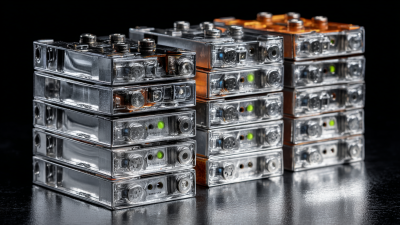
A stacked lithium battery is an advanced energy storage solution.
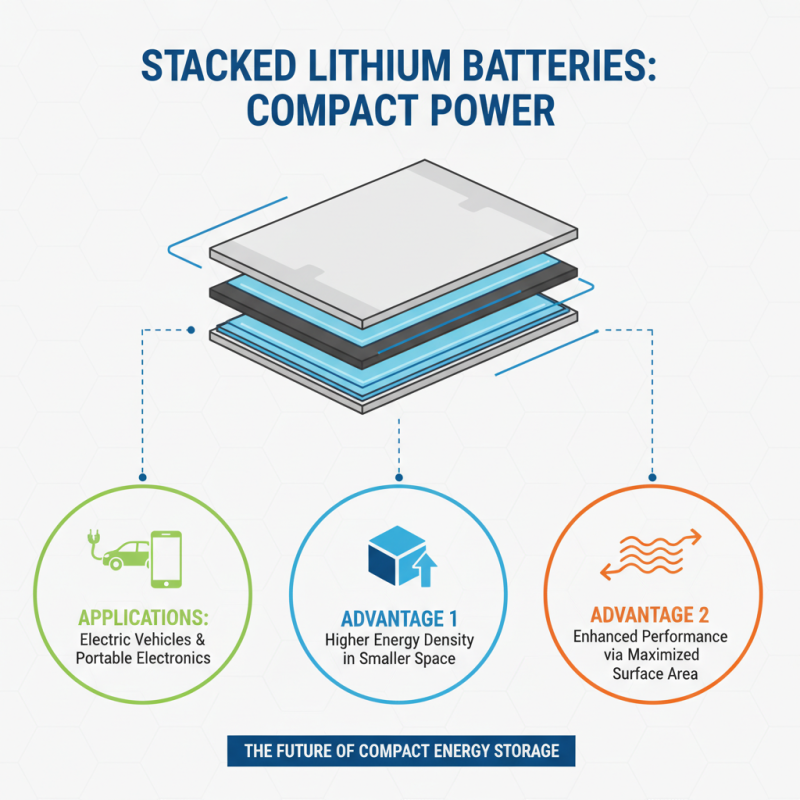
It consists of layers of lithium-based cells stacked together to optimize space and power output.
This design allows for greater energy density compared to traditional batteries.
When energy demands are high, these batteries can deliver robust performance.
The construction of a stacked lithium battery involves meticulous engineering.
Each layer has specific materials that influence the battery's efficiency and life span.
Using innovative separators, the layers can maintain thermal stability.
This is crucial, as overheating can lead to reduced performance or even failure.
However, the complexity can introduce challenges. Balancing multiple layers requires precise management.
Manufacturers often face difficulties in ensuring uniform quality across layers.
Small variations can lead to inefficiencies.
Additionally, the recycling of stacked batteries is still a developing area.
There are concerns about sustainable practices. As the technology evolves, advancements in materials and designs may offer solutions.
However, the path forward remains filled with uncertainties.
Components of a Stacked Lithium Battery
A stacked lithium battery is a sophisticated energy storage solution. Its design consists of multiple layers of cells, stacked together to increase energy density. This configuration allows for higher voltage and capacity in a compact space. The cells are often made from lithium compounds, crucial for performance.
Key components of a stacked lithium battery include the anode, cathode, and electrolyte. The anode typically consists of graphite, which provides a stable surface for lithium-ion intercalation. The cathode is made from materials like lithium nickel manganese cobalt oxide. These elements play a vital role in the battery's charge and discharge cycles.
The electrolyte serves as a medium for ion movement, enhancing conductivity. It can be a liquid or solid substance, affecting safety and efficiency. Each layer must be carefully designed to ensure optimal performance. However, the complexity of stacking poses challenges such as thermal management and potential short-circuits. It’s essential to consider improvements in materials and engineering to overcome such hurdles.
What is a Stacked Lithium Battery and How Does It Work? - Components of a Stacked Lithium Battery
| Component |
Description |
Function |
Material |
| Anode |
The electrode at which oxidation occurs |
Stores lithium ions during charging |
Graphite or silicon |
| Cathode |
The electrode at which reduction occurs |
Releases lithium ions during discharge |
Lithium cobalt oxide or lithium iron phosphate |
| Electrolyte |
Liquid or gel that allows ion movement |
Facilitates lithium ion transport between anode and cathode |
Lithium salt in solvent |
| Separator |
Material that prevents short circuits |
Isolates anode and cathode while allowing ion flow |
Polyethylene or polypropylene |
| Battery Management System (BMS) |
Electronic system that manages battery operation |
Ensures safety and efficiency of operations |
Electronic components |
Working Principle of Stacked Lithium Batteries
Stacked lithium batteries are a new approach to energy storage. Their design involves layering multiple cells together. This arrangement increases energy density and reduces space requirements. By stacking these cells, manufacturers can optimize performance. The result is a compact power source suitable for various applications.
The working principle revolves around lithium-ion technology. Each cell consists of an anode, cathode, and electrolyte. When the battery discharges, lithium ions move from the anode to the cathode. During charging, ions flow in the opposite direction. This movement generates electrical energy. The stacked design enhances the process. It allows for faster ion transfer between cells. However, managing heat and efficiency can still be a challenge.
Despite their advantages, stacked lithium batteries may face limitations. They require precise engineering to function optimally. Issues like uneven charge distribution can arise. This may lead to a shorter lifespan or safety concerns. Monitoring systems are crucial for performance management. Moreover, the manufacturing process can be complex. Continuous improvement is essential for broader adoption.
Advantages of Using Stacked Lithium Batteries
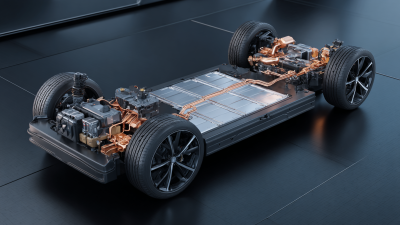
Stacked lithium batteries are gaining popularity for various applications. One main advantage is their compact design. They allow for higher energy density in smaller spaces. This is crucial in industries like electric vehicles and portable electronics. The stacked structure maximizes the surface area, enhancing performance.
Another benefit is improved thermal management. Stacked lithium batteries tend to dissipate heat more effectively. This can lead to increased longevity and safety, reducing the risk of overheating. Efficient heat distribution supports consistent power output, which is vital for high-demand devices.
There are some challenges, though. The complexity of design can lead to more difficult manufacturing processes. Issues during production might result in inconsistencies in battery performance. Thus, refining these techniques is essential. Users must also consider the balance between energy density and lifespan. Finding that sweet spot is a continuous journey in battery technology.
Applications of Stacked Lithium Battery Technology
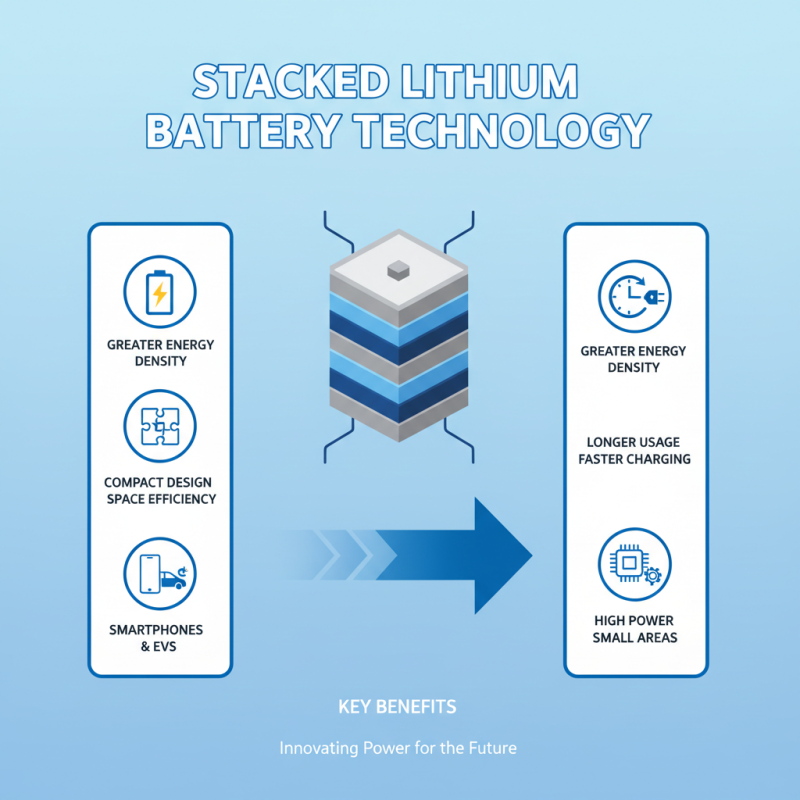
Stacked lithium battery technology is becoming increasingly important across various industries. Its compact design allows for greater energy density. This is essential for devices like smartphones and electric vehicles. In these applications, space efficiency is crucial. Stacked batteries can fit into small areas while providing high power. This means longer usage times and faster charging.
In the field of renewable energy, stacked lithium batteries are promising. They can store energy from solar and wind sources. By doing so, they help in managing energy distribution. However, there are challenges. The technology needs to mature for reliability. Some designs may still face issues with overheating. This affects performance and safety. Manufacturers must balance capacity and longevity.
Medical devices are another important application. Stacked lithium batteries can power portable equipment. This enhances mobility for patients requiring constant monitoring. Yet, the risk of battery degradation exists. Regular maintenance and updates are necessary. Innovations are required to address these concerns. The path forward is exciting but not without hurdles.