10 Essential Tips for Choosing Off Grid Lithium Battery Solutions?
Choosing the right Off Grid Lithium Battery can be daunting. The market offers numerous options, each with unique features. Industry expert Dr. Jane Smith, a leading figure in renewable energy, states, "Selecting the proper battery is crucial for efficiency and sustainability."
When considering Off Grid Lithium Batteries, it's vital to evaluate capacity, lifespan, and safety. Many users often overlook these factors. They might gravitate towards lower costs, which can result in poorer performance. A battery’s depth of discharge and thermal stability are equally important. Ignoring these can lead to underperformance.
Additionally, check for certifications like ISO or CE. These indicators ensure product reliability. Remember, finding the right Off Grid Lithium Battery can require trial and error. It's essential to conduct thorough research and learn from experiences. Your energy needs may evolve, making adaptability a key factor in your choice.
Understanding the Basics of Off Grid Lithium Battery Systems
Off-grid lithium battery systems are becoming increasingly popular for sustainable living. Understanding their basics is crucial for making informed choices. These systems store energy generated from renewable sources, like solar panels or wind turbines. They provide power even when the grid is down. Lithium batteries offer many advantages, such as longer lifespan and faster charging times. However, they also come with challenges, such as their sensitivity to temperature changes.
When choosing a system, consider the capacity you need. Calculate your daily energy consumption. It's easy to underestimate how much power you actually use. Some people are surprised by their needs. Also, think about the system's efficiency. Not all batteries charge uniformly. Some lose more energy during the conversion process.
Pay attention to safety features as well. Lithium batteries can be volatile if not managed properly. Look for systems with built-in protection. Be aware that maintenance requirements can vary significantly. Is it easy to monitor performance? Reflect on how the system fits into your lifestyle. Ask yourself if you are ready to embrace the off-grid life fully. Each decision shapes your energy independence.
Evaluating Battery Capacity: How to Calculate Your Energy Needs
When evaluating battery capacity, understanding your energy needs is crucial. Start by listing all devices you'll power. Calculate the wattage each device consumes. This helps you estimate your total energy requirement. Don’t forget to consider how long each device will run daily.
Tip: Keep a detailed log of usage. This log aids in accurate calculations. You might realize you overestimate some devices' consumption. This reflection is key to optimizing energy production.
Once you have a good estimate, you can choose an appropriate lithium battery. Consider peak usage hours. Batteries often perform best when not overextended. Check the total watt-hours you need. Divide this by the battery voltage for capacity.
Tip: Factor in future energy needs. Life is unpredictable. Your power requirements might grow. It's smart to plan ahead. Ensure your chosen solution accommodates potential expansions. An undersized battery leads to frustration.
10 Essential Tips for Choosing Off Grid Lithium Battery Solutions
| Criteria |
Value |
| Battery Capacity (Ah) |
100 Ah |
| Voltage (V) |
12 V |
| Total Energy (Wh) |
1200 Wh |
| Cycle Life (Cycles) |
3000 |
| Weight (kg) |
25 kg |
| Temperature Range (°C) |
-20 to 60 |
| Charge Time (hours) |
6 hours |
| Depth of Discharge (%) |
80% |
| Cost (USD) |
800 |
| Warranty (years) |
10 |
Assessing Lifespan and Cycle Count for Long-Term Value
When choosing off-grid lithium battery solutions, lifespan and cycle count are vital factors. Lifespan refers to how long a battery can last before it needs replacement. Most lithium batteries promise a lifespan of around 10 years. However, real-world performance can vary. It's crucial to assess the conditions in which the battery will operate. Extreme temperatures or frequent discharge cycles can shorten the battery's lifespan.
Cycle count is another critical metric. Each cycle represents a full discharge and recharge. A higher cycle count indicates greater longevity. Many batteries offer up to 3,000 cycles. Yet, not all batteries hold up to this expectation. Factors like depth of discharge and charging habits can impact cycle longevity. It's essential to evaluate your usage patterns. If you consistently push a battery to its limits, expect a decrease in performance.
Reflecting on your specific needs is key. Not every off-grid setup is the same. It may be wise to consult with experts on battery choices. Always consider the total cost of ownership too. Cheaper options may lead to higher replacement rates, resulting in long-term expenses. Prioritize reliability over initial savings. This approach will ultimately lead to a better off-grid experience.
Examining Discharging Rates and Their Impact on Performance
When selecting off-grid lithium battery solutions, discharging rates play a crucial role in performance. Discharge rates determine how quickly a battery can release its stored energy. A higher discharge rate is often advantageous for applications requiring substantial power. For instance, solar energy systems benefit from batteries that can efficiently release energy during peak demand times.
Understanding the impact of discharging rates isn't straightforward. Many users find themselves overwhelmed by technical jargon. It’s essential to find batteries that match your specific energy needs without overspending. Some batteries may show impressive numbers on paper but fail to perform under real-life conditions. Reflecting on past purchases can reveal how specific discharge rates affected your system's performance.
Capacity isn't everything; the balance between capacity and discharge rates often holds the key to efficiency. If a battery can't maintain its capacity during high discharge periods, it compromises the entire energy system. Observing how well a battery holds up under load can provide deeper insights into its reliability. Some users might discover that a battery’s performance doesn’t align with their expectations. This realization can lead to reevaluating choices.
Choosing the right battery requires careful observation and reflection on personal energy consumption patterns.
Choosing the Right Battery Chemistry for Off Grid Applications
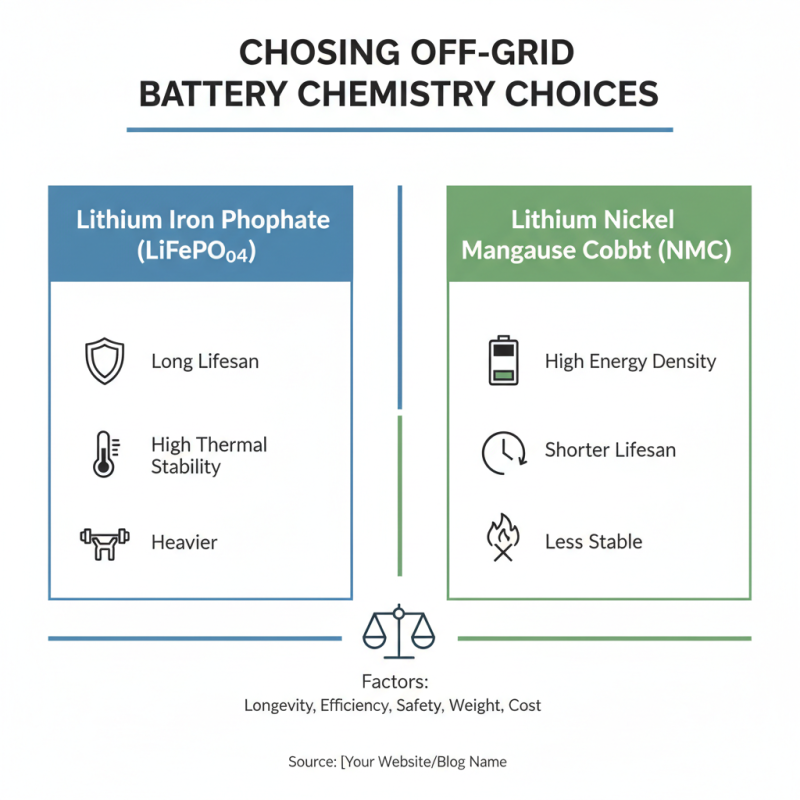
When selecting battery chemistry for off-grid applications, several factors come into play. Lithium batteries are popular due to their longevity and efficiency. However, not all lithium batteries are the same. Understanding their different chemistries is crucial. For example, lithium iron phosphate (LiFePO4) offers better thermal stability but can be heavier. Meanwhile, lithium nickel manganese cobalt (NMC) batteries provide higher energy density but may have a shorter lifespan.
Before making a choice, consider your energy needs. Analyze how much power you will consume. Will your usage be constant or vary throughout the day? These details affect your battery's performance. Remember, battery size and weight can also impact your off-grid setup. Larger batteries provide more power but require more space. Sometimes, it’s worth reflecting on whether your space can accommodate these larger options.
Tip: Always look for warranties and longevity ratings. Not all batteries perform well over time. Some may degrade faster than advertised. Investing in quality often pays off. Ensure the battery can handle the environmental conditions you expect, like temperature extremes. Don’t overlook the importance of knowing all the specifications before finalizing your decision. This knowledge will save you from potential headaches later.