How to Choose the Best Rack Lithium Battery?
Choosing the best Rack Lithium Battery requires more than comparing prices on a supplier’s webpage. A rack may look like a neat metal cabinet, yet its real value depends on usable capacity, cycle life, thermal control, safety testing, and service support. The International Energy Agency reported that battery storage additions in the power sector nearly doubled in 2023, reaching about 42 GW. That growth signals strong demand, but it also creates confusion. Not every battery rack suits every site.
The BloombergNEF Battery Price Survey reported an average lithium-ion pack price of approximately $115 per kWh in 2024. However, a complete Rack Lithium Battery system costs more than its cells. Buyers must account for the battery management system, enclosure, cooling, installation, monitoring, and warranty terms. A cheaper quote may hide weaker integration.
Battery scientist Dr. Jeff Dahn has emphasized, “The battery is the most important component of an electric vehicle.” The same principle applies to stationary storage, although operating conditions differ. A rack serving a warehouse may face daily cycling, dust, heat, and limited maintenance access. Check the warranty’s cycle assumptions, not just its years.
Safety deserves practical attention. Look for documented testing, clear failure responses, and recognized standards such as UL 9540 and UL 9540A, where applicable. Ask for evidence. Trust should be earned.
There is no universal best model. A high-energy rack can disappoint when power demands are underestimated. Careful sizing, verified data, and a realistic maintenance plan usually matter more than impressive specifications.

What Is a Rack Lithium Battery and How Does It Work?
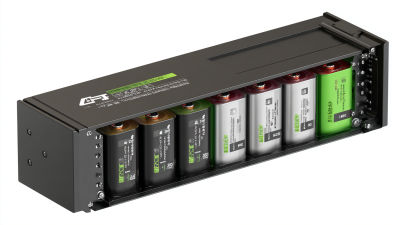
A rack lithium battery is a modular energy storage system installed inside a standard equipment rack. Each battery module contains lithium cells, sensors, and protective circuits. Several modules connect in parallel to increase storage capacity, while a power conversion system manages electricity flow. The battery management system, or BMS, monitors voltage, current, temperature, and state of charge. It can disconnect the system when unsafe conditions appear.
In practical installations, the battery supplies direct current to an inverter, which converts it into usable alternating current. During charging, the inverter reverses this process. Good airflow matters. Leave clear space around the rack, keep cables firmly secured, and avoid placing the unit near heat or moisture. A temperature sensor near the rack can reveal problems that a dashboard may miss. Small details matter.
Choosing the right rack battery requires more than comparing capacity. Check the required voltage, daily energy use, peak load, backup time, installation space, and communication compatibility. A battery rated at 10 kWh may provide less usable energy after reserve limits and conversion losses. This is easy to overlook. I would also review warranty conditions, maintenance access, safety certifications, and the BMS protection strategy. No design is perfect. Real loads change, and early estimates can be wrong, so measured consumption should guide the final battery size.
How to Determine Your Energy Storage and Power Requirements
Choosing the best rack lithium battery starts with a clear energy and power assessment. In site assessments, I record every appliance, its wattage, operating hours, and starting surge. A refrigerator may use 150 watts while running but demand several times more briefly. Ignore that surge, and the inverter may trip unexpectedly. Measure real consumption with a power meter whenever possible. Estimates often look cleaner than reality.
Calculate daily energy in kilowatt-hours by multiplying each load’s watts by its operating hours. Add lighting, networking equipment, pumps, and seasonal devices. Then decide how many backup hours you need. If your loads consume 8 kWh daily, a battery should not provide only 8 kWh of nominal capacity. Usable capacity decreases because of discharge limits, conversion losses, temperature, and aging. A practical design may require 10 to 12 kWh, depending on the permitted depth of discharge.
Power requirements need separate attention. List the highest loads operating at the same time, not just the daily total. Check continuous and peak output ratings, charging current, rack voltage, and inverter compatibility. Leave expansion space if demand may grow. I once underestimated workshop tools because they were used briefly; their startup current still controlled the system design. That mistake was useful. Recheck assumptions with measured data, maintenance records, and a qualified installer before final sizing.
How to Choose the Best Rack Lithium Battery?
Determine battery size from both daily energy consumption and peak power demand. The examples below use representative load profiles and calculate recommended nominal battery capacity using 90% usable depth of discharge and 95% battery-system efficiency.
Formula: Daily energy = Load power × Operating hours. Recommended nominal capacity = Daily energy ÷ (0.90 × 0.95). Select a battery rack whose continuous and peak power ratings also exceed the connected loads.
Which Battery Specifications and Chemistry Should You Compare?
Choosing a rack lithium battery starts with matching specifications to the actual load, not the advertised capacity.
Measure daily energy use, peak power, and backup hours. A 10 kWh battery may not deliver 10 kWh in practice. Usable energy depends on the allowed depth of discharge, temperature, inverter efficiency, and reserve settings. Check nominal voltage carefully. A battery and inverter must share compatible voltage ranges and communication protocols. Small mismatches can cause repeated shutdowns.
Chemistry deserves equal attention.
Lithium iron phosphate usually offers strong thermal stability, long cycle life, and predictable performance for stationary storage. Nickel-based lithium chemistry can provide higher energy density, but it may require stricter thermal control. Compare cycle ratings under the same test conditions. A cycle tested at shallow discharge is not equal to a full daily cycle. Look at the continuous and peak discharge current, too. A large capacity figure cannot compensate for a weak power rating.
I inspect rack depth, terminal access, cable routing, and ventilation during real installations. Weight matters when a cabinet sits above floor level. So does the battery management system. It should monitor cell voltage, temperature, balancing, and fault conditions. Ask for test reports, protection details, operating temperature limits, and service procedures. Certifications and traceable documentation support safer decisions. I once underestimated cold-weather performance; the battery seemed adequate until morning output fell sharply. That mistake changed my comparison checklist. Some specifications still look precise without explaining their test method. Read the footnotes.
How to Select a Reliable Rack Lithium Battery and Supplier
Selecting a reliable rack lithium battery starts with the supplier, not the lowest quotation.
BloombergNEF’s 2024 Lithium-Ion Battery Price Survey reported an average pack price of $115 per kWh, down 20% from 2023. Lower prices can help, but they may also reflect thinner service, weaker testing, or shorter warranties. Ask for cell traceability, production records, and documented cycle-life tests. A rack system should also include a battery management system with temperature monitoring, overcurrent protection, balancing, and clear communication protocols.
Chemistry matters.
Lithium iron phosphate usually offers strong thermal stability and long service life for stationary storage, but its performance depends on temperature, charge limits, and installation quality. The International Energy Agency’s Batteries and Secure Energy Transitions report says global energy storage capacity must increase sixfold by 2030. Supplier capability will therefore matter more as deployment expands. Request test evidence aligned with IEC 62619, UL 1973, and UN 38.3 requirements, where applicable. Check whether reports are current and issued by independent laboratories.
Look beyond the battery cabinet.
Can the supplier provide replacement modules, remote diagnostics, and local technical support? Ask how warranty claims are measured.
“Up to 6,000 cycles” means little without the depth of discharge and operating temperature.
One uncomfortable detail: polished documents do not prove field reliability. Speak with installers, inspect a working site, and review failure data when available. I would also test communication before purchase, because integration problems often appear after delivery.