How to Choose the Right Rack Lithium Battery for Your Needs?
Choosing the right Rack Lithium Battery can significantly impact your energy needs. According to John Taylor, a renowned expert in battery technology, "Selecting the correct battery requires understanding your specific requirements." This highlights the importance of careful evaluation before making a choice.
The market offers various options, each designed for specific applications. For instance, some batteries are optimized for storage, while others focus on performance. Knowing your intended use can help narrow down the selection. Some users may overlook the importance of system compatibility. A battery that doesn’t fit well can lead to inefficiencies.
Moreover, users often underestimate their power needs. It’s vital to assess usage patterns thoroughly. Many individuals assume a standard size will suffice without considering performance demands. This can lead to unexpected underperformance and frustration. A balanced approach to choosing Rack Lithium Batteries involves understanding both the technical specifications and your personal requirements. Taking time to reflect on these aspects will ensure a more satisfactory choice.

Understanding the Basics of Rack Lithium Batteries
Rack lithium batteries are becoming increasingly popular for various applications. They offer higher energy density compared to traditional lead-acid batteries. This means you can store more energy in a smaller space. According to a 2022 industry report, the global lithium battery market is expected to grow by 25% annually. This growth highlights the increasing reliance on these advanced batteries.
When considering a rack lithium battery, it’s crucial to understand its technical specifications. Capacity, voltage, and cycle life are key metrics. A battery's capacity, usually measured in amp-hours (Ah), determines how long it can power your devices. Cycle life indicates how many charging and discharging cycles the battery can effectively handle. On average, high-quality lithium batteries last over 3,000 cycles. This is far superior to lead-acid batteries, which typically last around 500 cycles.
Despite these advantages, potential users should also contemplate their specific needs. Every application requires different energy demands and discharge rates. The wrong battery choice can lead to inefficiencies. Costs can also be a concern; while lithium batteries offer long-term savings, the initial investment is higher. Understanding these factors helps ensure a more informed decision, maximizing benefits and minimizing drawbacks.
Identifying Your Power Requirements and Usage Scenarios
When selecting the right rack lithium battery, start by identifying your power needs. Think about the devices you will power. How often will you use them? Estimate the total wattage. If your usage fluctuates, consider a battery that offers versatility. For instance, small devices may require less power, while larger machinery demands more.
Next, assess your usage scenarios. Will the battery be stationary or mobile? A lightweight battery is crucial for portable applications. If it’s stationary, weight may not be as critical. Don’t forget about environmental factors. Coastal areas may necessitate additional protection against corrosion. Reflect on these details. It’s important to choose wisely.
Also, evaluate energy storage capacity. A battery with too small a capacity could leave you in the lurch. On the flip side, an oversized battery can be a burden. Understand your requirements well. Analyze your energy consumption patterns periodically. Mistakes in estimation may lead to frustrations later.
Evaluating Battery Specifications and Features
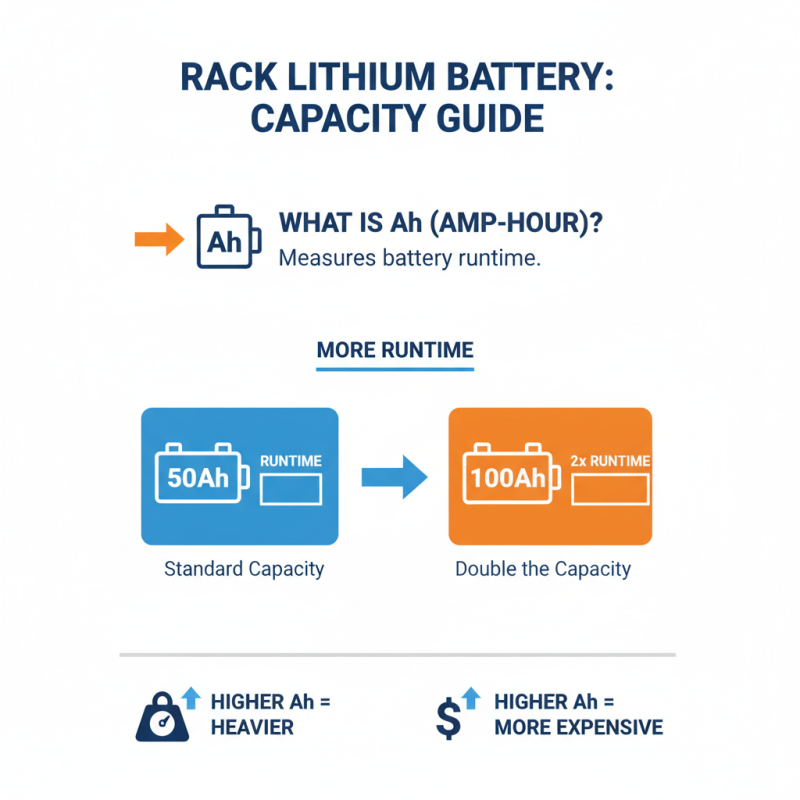
When selecting a rack lithium battery, understanding specifications is crucial. Capacity is often measured in amp-hours (Ah). A battery with a higher Ah rating generally provides more runtime. For example, a 100Ah battery offers about twice the capacity of a 50Ah battery. However, larger capacity batteries are heavier and more expensive.
Next, consider the voltage specifications. Most lithium batteries range between 12V and 48V. Ensure that the voltage matches your system requirements. For instance, a 12V battery works well for small systems, while a 48V option suits larger setups. An 800-cycle life span is common for good quality lithium batteries. Some may last longer, but this can be tied to cycles and depth of discharge.
Evaluate other features like discharge rates. A high discharge rate allows greater power output, but may reduce overall battery life. Reports show that batteries with a discharge rate of 1C can be beneficial for devices with sudden power needs. Yet, using a battery beyond its rated discharge can lead to reduced performance. Reflect on your power demands carefully. Balancing capacity, voltage, and discharge rates is essential for making a smart choice.
Comparing Different Brands and Models
When choosing a rack lithium battery, comparing various brands and models is essential. Not all batteries are created equal. Some offer longer lifespans, while others excel in efficiency. Research indicates that high-quality lithium batteries can last over 2,000 cycles. This statistic highlights their durability compared to traditional lead-acid batteries.
Pay attention to capacity ratings. A battery's capacity determines how much energy it can store. For instance, a 100 Ah battery typically powers devices drawing 10 amps for about 10 hours. However, not all 100 Ah batteries perform similarly. Users should also consider the battery’s weight and size. A lighter and more compact option can enhance portability.
Tips: Always check warranty terms. A solid warranty indicates confidence in the product. Look for user reviews that detail real-world performance. These insights often reveal issues manufacturers do not mention. Be cautious of models that appear too good to be true. They might come with hidden drawbacks.
Battery technology evolves quickly. Stay updated on the latest innovations. Research reports highlight significant advancements in energy density. This means newer models may offer better power for less weight. Adaptability to different operating conditions is crucial. A battery that performs well in one environment may struggle in another.
Comparison of Key Metrics for Rack Lithium Batteries
Considering Installation and Maintenance Factors
When considering installation for rack lithium batteries, the environment plays a crucial role. The space must allow proper airflow. Poor ventilation can lead to overheating and efficiency declines. According to industry reports, improper installation can reduce battery life by up to 30%. Proper positioning is essential for longevity.
Maintenance factors should not be overlooked. Regular checks are vital. This includes monitoring charge levels and ensuring connections are secure. Neglected maintenance can result in performance drops. A study by the Battery Research Institute shows that 40% of battery failures stem from lack of maintenance. Engaging in simple upkeep can enhance performance.
Installing a battery system also requires addressing safety protocols. Clear access to emergency cut-offs is important. The National Fire Protection Association emphasizes that 20% of electrical fires are linked to battery malfunctions. It’s essential to reflect on these aspects before installation. Ensuring a well-thought-out setup will lead to a more efficient, safer system.