How to Choose an Inverter and Lithium Battery for Your Needs?
Choosing the right inverter and lithium battery is crucial for various applications. An inverter converts DC to AC power, while lithium batteries provide efficient energy storage. Understanding your needs is key. Are you using it for home backup or off-grid living?
Different models exist, tailored to specific requirements. The inverter and lithium battery you select can greatly affect performance. Make sure to assess your energy consumption. Think about how much power you'll need daily. This process may feel overwhelming.
Consider factors like capacity, size, and price. You should also think about installation and maintenance. There’s no one-size-fits-all solution here. Reflect on your choices and their long-term effects. The right combination can enhance your lifestyle. However, mistakes can be costly. That’s why careful planning matters.
Understanding Inverters: Types and Functions
Inverters are essential for converting direct current (DC) to alternating current (AC). This process enables you to power various household appliances. There are different types of inverters, including pure sine wave, modified sine wave, and square wave. Pure sine wave inverters provide the cleanest power. They are ideal for sensitive devices like computers. Modified sine wave inverters are more affordable and work well for many appliances. However, they may not be suitable for all electronics.
When choosing an inverter, consider its capacity. The inverter’s wattage must match your needs. Too low a capacity may cause overheating and failure. It's also crucial to check the surge rating. This rating determines how much power you need at startup. Additionally, the inverter’s efficiency impacts energy consumption. Look for models with a higher efficiency rating to save on energy costs.
Don’t forget the battery. The choice of lithium battery can significantly affect performance. Lithium batteries charge faster and last longer. However, they can be more expensive initially. Weighing the cost versus long-term benefits is essential. Understanding your specific needs ensures you select the right components. Reflecting on how you use electricity can guide your choices. Choosing the right inverter and battery is not a one-size-fits-all decision. Consider your unique situation carefully.
Key Factors in Choosing an Inverter
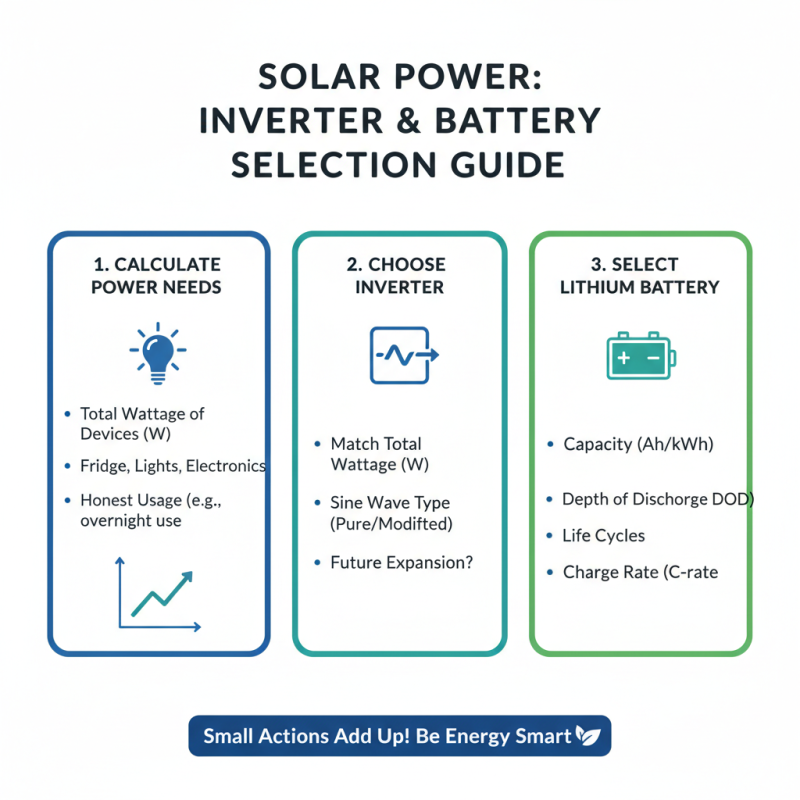
When selecting an inverter, consider its power output. This depends on your needs. Calculate the total wattage of the devices you plan to use. Remember, it's wise to choose an inverter with a little extra capacity. This prevents overloads during peak usage times.
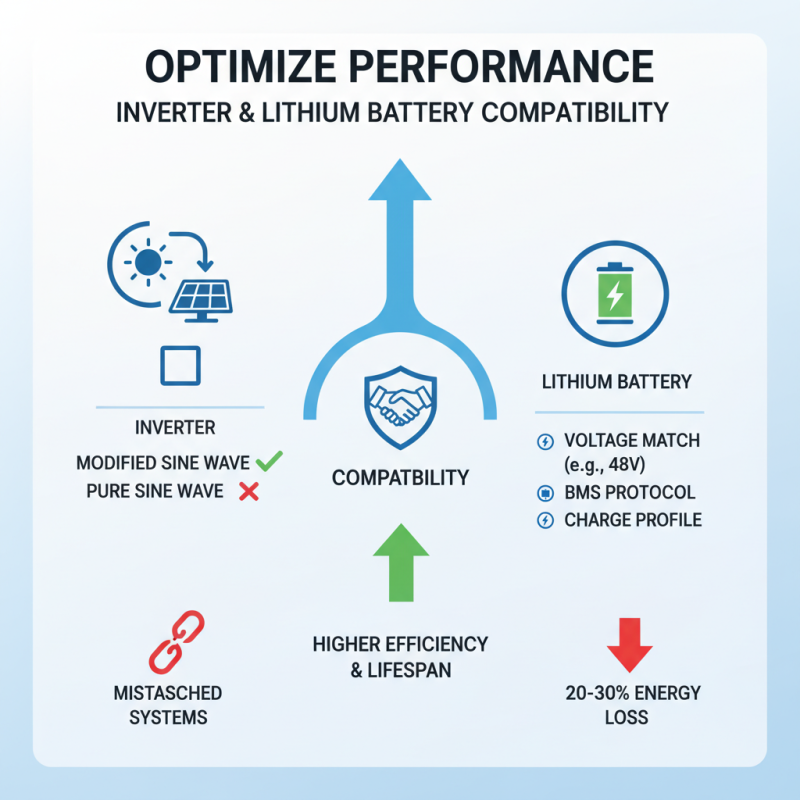
Efficiency is another crucial factor. A highly efficient inverter reduces energy loss. It also prolongs battery life. Look for inverters with a high efficiency rating. This can save you money in the long run. Additionally, think about the inverter type. Modified sine wave inverters are cheaper but may not work well for sensitive electronics. Pure sine wave inverters are pricier but often necessary for delicate devices.
Don't overlook the physical size. Your inverter needs to fit in your space. Check its cooling requirements as well. Inverters generate heat. Ensure you have proper ventilation to avoid overheating. Finally, read user reviews. They can reveal potential issues not mentioned in specifications. Balancing all these factors helps you make a smarter choice.
How to Choose an Inverter and Lithium Battery for Your Needs? - Key Factors in Choosing an Inverter
| Factor |
Inverter Specification |
Lithium Battery Specification |
| Power Output |
1000 - 5000 Watts |
12V to 48V, 100Ah - 300Ah |
| Efficiency Rating |
85% - 95% |
95% - 98% |
| Waveform Type |
Pure Sine Wave |
N/A |
| Safety Features |
Overload Protection, Short Circuit Protection |
BMS (Battery Management System) |
| Charge Time |
N/A |
4 - 8 hours |
| Weight |
5 - 20 kg |
10 - 40 kg |
| Warranty |
1 - 5 years |
5 - 10 years |
Lithium Batteries: Advantages and Applications
Lithium batteries have gained popularity for various reasons. They are lighter and more compact than traditional batteries. This makes them ideal for portable devices. In addition, they offer higher energy density. This means they can store more power in less space.
Their applications are diverse. Many use them in electric vehicles for long-range travel. They power renewable energy systems like solar panels. Homeowners often prefer them for energy storage. They help balance energy supply and demand efficiently.
However, these batteries can be expensive. Cost is a significant factor to consider. Frequent replacements may also be necessary due to degradation over time.
While lithium batteries have advantages, they also require careful handling. Environmental concerns around disposal and recycling exist. It’s essential to research safe disposal methods. Understanding these factors can help users make informed choices.
Different needs may lead to different decisions. Finding the right balance is key.
Determining Your Power Needs and Capacity
When choosing an inverter and lithium battery, understanding your power needs is crucial. Begin by calculating the total wattage of the devices you plan to use. Consider appliances like refrigerators, lights, and electronics. Be honest about your usage. Do you leave devices on all night? Small actions add up.
Next, think about capacity. Lithium batteries are rated in amp-hours. You need to determine how long you want to run your devices. For example, if your setup requires 1000 watts and you want six hours of power, you'll need a battery that can support at least 6000 watt-hours. Sometimes, people underestimate this. They buy a battery that is too small, creating headaches later.
It’s not just about numbers. You might also want to consider the frequency of your usage. If you plan to use your system only occasionally, a smaller battery could suffice. But, if it’s for daily use, a larger capacity is wise. Remember, flexibility can be a double-edged sword. Balancing cost and capacity can be complex, but taking the time to analyze your needs may lead to better choices.