How to Choose the Best Inverter Hybrid 3kw for Your Needs?
Choosing the right Inverter Hybrid 3kw can be challenging. Many options exist, and each has its strengths. As energy expert Dr. James Parker states, "The best inverter fits your unique energy needs." This insight is vital when selecting an inverter.
When considering an Inverter Hybrid 3kw, think about your power requirements. Assess your home appliances and their usage. Do you often have power outages? Is energy efficiency important to you? Details like these matter greatly. Even small appliances can influence your choice.
There might be confusion around specifications and features. Not every inverter is the same. Performance varies among brands. Keep in mind that cost doesn’t always equate to quality. Reflect on what you truly need. A clearer understanding leads to a better decision.
Understanding the Basics of Inverter Hybrid Technology
Inverter hybrid technology combines traditional power sources with renewable energy. This integration optimizes energy efficiency and promotes sustainability. A report from the International Energy Agency indicates that hybrid systems can reduce carbon emissions by up to 40%. This technology is crucial for those looking to decrease their environmental footprint.
When selecting a 3kw inverter hybrid, understanding its components is essential. These devices typically include solar panels, batteries, and an inverter. The inverter manages power flow, ensuring that energy is distributed effectively. The performance can vary significantly based on the quality of each component. Some users find that cheaper models do not perform as well, leading to disappointing results.
Moreover, the compatibility of the inverter with existing systems can be challenging. Many users overlook this aspect, leading to inefficient energy use. Energy storage capacity is another vital factor. A report from the Global Energy Storage Association emphasizes that batteries need to be sized appropriately for maximum effectiveness. Not considering these details can lead to unexpected costs and inefficiency in energy management.
Key Features to Consider in a 3kW Inverter Hybrid System
When selecting a 3kW inverter hybrid system, several key features are essential to consider. Efficiency is one of the most critical aspects. Look for an inverter with high conversion rates. This impacts energy usage and costs directly. A more efficient system saves you money in the long run.
Battery compatibility also plays a significant role. Ensure the inverter can work seamlessly with your battery type. Lithium batteries may require different management than lead-acid ones. Mismatches can cause inefficiencies or even damage. Understanding these details is crucial.
Tips: Try to assess your energy needs realistically. Many users underestimate their actual consumption. Consider future energy requirements as well. The right inverter should accommodate possible expansions or additional loads without hassle.
Check out user reviews and experience feedback to gauge real-life performance. You want an inverter that performs well in various conditions. A product that excels on paper might not deliver in practice.
Assessing Your Power Needs and Consumption Patterns
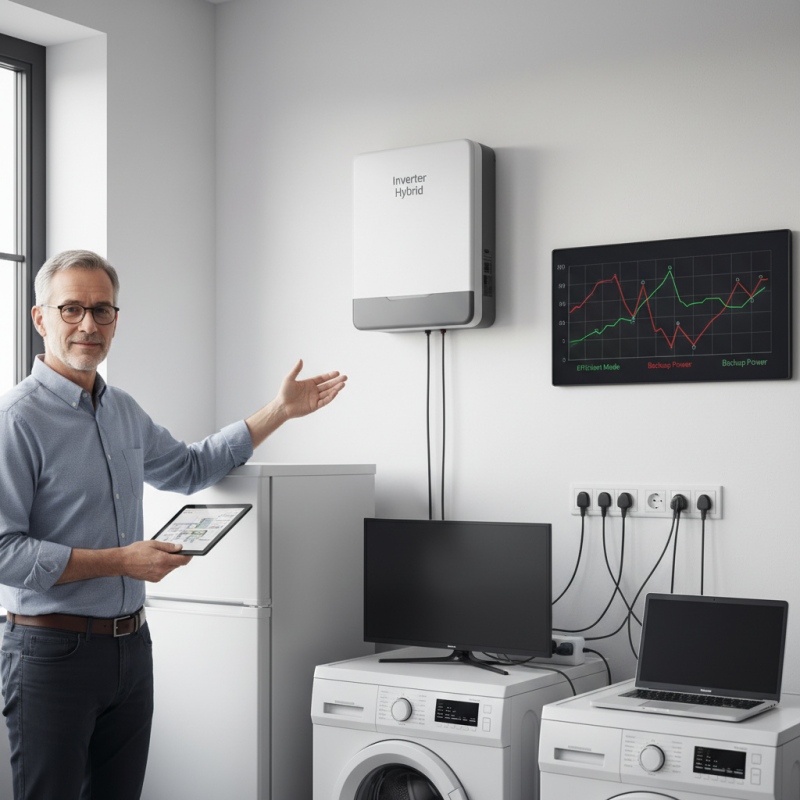
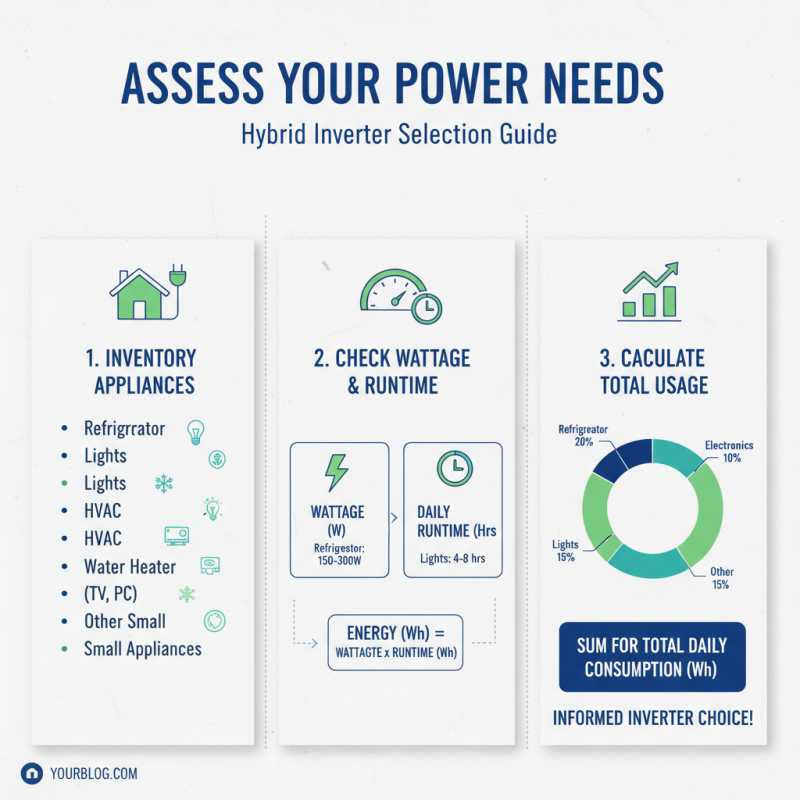
When choosing a hybrid inverter, understanding your power needs is crucial. Begin by reviewing the appliances you regularly use. Consider their wattage and how often they run daily. This detailed assessment helps you gauge overall energy consumption. For instance, a refrigerator typically requires a steady power supply, whereas lights consume less.
Next, think about the total wattage you might need at peak times. It's not just about standard use. Sometimes, multiple devices operate simultaneously. For example, running a washing machine and a heater at the same time demands more power. Tracking your usage over a week might reveal surprising patterns.
Pay attention to special events, too. Do you host parties? That may influence your energy requirements. If weekends are busy, factor that into your calculations. Emerging needs can shift over time. As you reflect on your patterns, be sure to adjust your assessment accordingly. This thought process isn’t perfect but is an essential step in making an informed choice.
Evaluating Cost, Efficiency, and Warranty Options
When selecting a 3kw hybrid inverter, cost is a crucial factor. The average price range for high-quality units is between $1,000 and $3,000. This price variation often reflects efficiency ratings and additional features. For example, inverters with a higher peak efficiency can convert more DC power to AC, saving on energy bills. Reports suggest that an efficiency rate exceeding 90% can contribute to significant savings over time.
Warranty options also warrant careful consideration. Many manufacturers offer warranties from five to ten years. A longer warranty often indicates greater confidence in durability and reliability. Some sources show that faulty inverters can lead to energy losses of around 20% in the first five years if not addressed. Check the details of what is covered and any additional costs for repairs. Transparent warranty policies can be a sign of a trustworthy product.
Moreover, assessing the efficiency of hybrid inverters can be complex. Some models claim to have high efficiency but may not perform well under specific conditions. It’s essential to read real user reviews. Evaluating performance data can reveal hidden flaws. Testing in real-world scenarios can provide insights that ratings may overlook. Adopting a critical perspective is necessary when navigating this market.
How to Choose the Best Inverter Hybrid 3kw for Your Needs? - Evaluating Cost, Efficiency, and Warranty Options
| Model |
Cost (USD) |
Efficiency (%) |
Warranty (Years) |
| Model A |
$800 |
93 |
5 |
| Model B |
$900 |
95 |
7 |
| Model C |
$750 |
90 |
3 |
| Model D |
$850 |
92 |
6 |
| Model E |
$950 |
94 |
8 |
Installation and Maintenance Requirements for Inverter Hybrids
When installing an inverter hybrid 3kw system, location matters. Find a place with enough sunlight exposure. The roof is often ideal. Ensure that the space is free from obstructions. Plants, nearby structures, and even dirt can decrease efficiency. This assessment requires careful observation.
Maintenance is just as crucial. Check the system regularly for dust and debris. A clean inverter runs better and lasts longer. Pay attention to any strange sounds. These might indicate an issue needing urgent care. Sometimes, minor problems can escalate if ignored. If unsure, consult with professionals for assessments.
Be wary of the components. Over time, batteries may degrade in performance. Monitor them closely for any signs of wear. Proper care extends their lifespan. Documentation should be maintained to track any upgrades or repairs. This ensures you know the system's history, which aids in troubleshooting.