How to Choose the Best Low Frequency Hybrid Inverter for Your Needs?
Choosing the right Low Frequency Hybrid Inverter is crucial for your energy needs. These inverters blend solar, wind, and battery energy seamlessly. They offer flexibility and efficiency for both residential and commercial setups.
When selecting an inverter, consider your energy consumption. Each household's needs vary widely. A mismatch can lead to inefficiencies and wastage. Additionally, the inverter's compatibility with existing systems should not be overlooked. Take the time to research different models and brands. User reviews and expert opinions can provide valuable insight.
Remember, not all inverters are created equal. This makes understanding your options vital. Some may be more reliable than others in critical situations. Delve deeper into technical specifications and warranty offers. Some choices may seem appealing but could fall short in performance. It's essential to reflect on both immediate and long-term needs when investing in a Low Frequency Hybrid Inverter.

Understanding Low Frequency Hybrid Inverters and Their Features
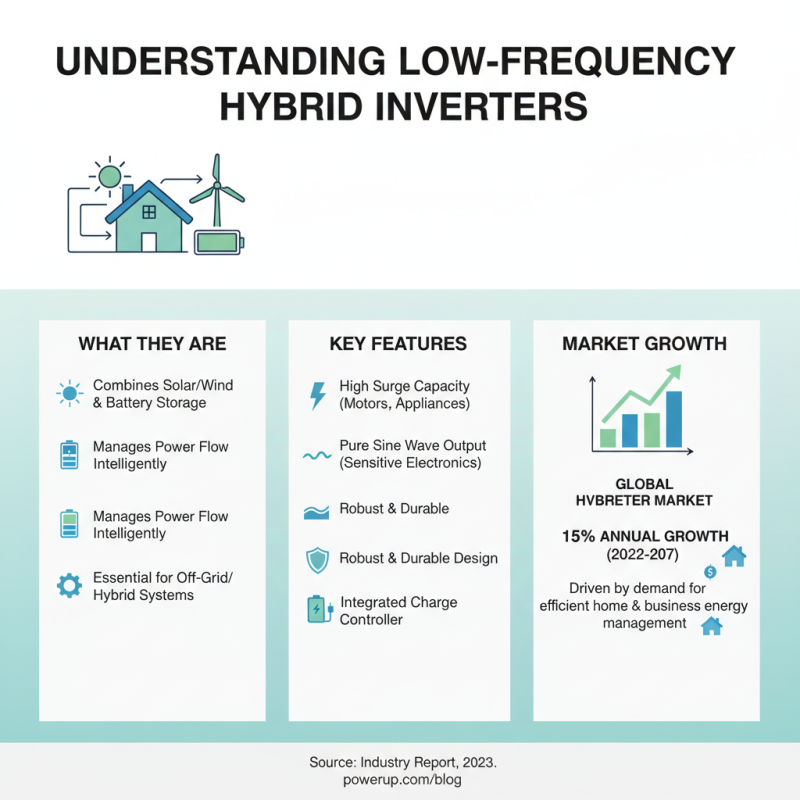
Low frequency hybrid inverters are increasingly popular in renewable energy systems. These devices combine battery storage and renewable energy sources for optimal performance. According to a recent industry report, the global hybrid inverter market is expected to grow by 15% annually through 2027. This growth underscores the demand for efficient energy management in homes and businesses.
Understanding the key features of low frequency hybrid inverters is crucial. These inverters typically offer a broader voltage range. This allows them to perform better in various applications. Some models can handle input voltages from 12V to over 48V. This versatility is essential for diverse energy needs. Additionally, many hybrid inverters include smart features like remote monitoring. They help users track energy usage in real time, providing insights into consumption patterns.
However, not all low frequency hybrid inverters are created equal. Users must consider specific needs such as power output and compatibility with existing systems. While many inverters boast high efficiency ratings, actual performance may vary. It's vital to consult technical specifications and user reviews. A deeper understanding can help make informed decisions. Balancing price with features is another important factor. Sometimes, cheaper options may lead to unsatisfactory performance. Thorough research is necessary to avoid common pitfalls in selecting the right inverter.
Evaluating Power Requirements for Your Specific Energy Needs
When evaluating power requirements for a low frequency hybrid inverter, first assess your energy consumption. This involves understanding daily usage patterns. According to the U.S. Energy Information Administration, the average American household consumes about 877 kWh per month. Determine your essential appliances. Consider lighting, heating, and appliances that consume significant energy.
Next, analyze peak power needs. Some devices require more power at startup. For example, refrigerators and air conditioners can demand up to three times their running wattage during startup. This peak demand should influence your inverter selection. A study from the National Renewable Energy Laboratory indicates that inverters with a higher surge capacity can effectively manage these fluctuations.
Finally, think about future needs. If you plan to expand your energy use, such as adding solar panels or electric vehicles, ensure your inverter can handle increased loads. It's essential to avoid underestimating these requirements. An inverter that is not capable may result in performance issues, leading to energy waste or even equipment damage. Balancing current and future power needs is critical in making the right choice.
How to Choose the Best Low Frequency Hybrid Inverter for Your Needs? - Evaluating Power Requirements for Your Specific Energy Needs
| Power Requirement (W) |
Recommended Inverter Size (VA) |
Recommended Battery Capacity (Ah) |
Typical Use Case |
| 1000 W |
1200 VA |
100 Ah |
Running small appliances |
| 2000 W |
2400 VA |
200 Ah |
Running medium appliances |
| 3000 W |
3600 VA |
300 Ah |
Running heavy appliances |
| 5000 W |
6000 VA |
400 Ah |
Whole house applications |
Comparing Different Brands and Models of Low Frequency Inverters
Choosing the right low frequency hybrid inverter can be challenging due to the vast number of brands and models available. The inverter's performance and reliability are critical, especially for off-grid or backup power systems. Recent industry reports indicate that the efficiency of these inverters typically ranges from 85% to over 95%. This means selecting a model with high efficiency directly impacts energy savings and operational costs.
When comparing different brands, consider their customer support and warranty periods. A reliable inverter will often come with a long warranty, offering peace of mind. Look for inverters with robust build quality that can withstand various environmental conditions. Industry standards suggest that inverters used in extreme temperatures perform poorly if not specifically designed for such environments.
Tip: Research user reviews and expert opinions. This helps gauge long-term reliability. When reading reviews, watch for patterns related to failures or excellent customer service. Sometimes, models with a steep initial price may save significant money through longevity and fewer repairs. Always weigh cost against potential performance.
Assessing Installation and Maintenance Considerations
When considering the installation of a low frequency hybrid inverter, assessing the site conditions is vital. Clear space is essential. Many installations require at least 2-3 feet of clearance around the unit. Proper ventilation is crucial for optimal performance. Poor air circulation can lead to overheating, decreasing efficiency. Reports indicate that 30% of inverter failures stem from inadequate cooling.
Maintenance considerations also play a significant role. Regular inspections can prevent unexpected failures. Many experts recommend checking connections and cleaning the inverter every six months. A study by the Solar Energy Industries Association found that routine maintenance can extend the lifespan of an inverter by up to 20%. Customers often overlook the impact of dust and dirt. These factors can cause performance drops, potentially leading to higher operational costs over time.
Additionally, consider the accessibility of the installation site. Difficult-to-reach locations can complicate repairs. This factor can affect long-term maintenance costs. Some users report that hard-to-reach units lead to increased downtime when issues arise. Planning ahead for these challenges can save money and time in the long run.
How to Choose the Best Low Frequency Hybrid Inverter for Your Needs?
This chart illustrates the comparison of key features considered when selecting a low frequency hybrid inverter. The features include Efficiency, Total Harmonic Distortion (THD), Warranty Period, and Maximum Output Power.
Reviewing Budget and Cost-Effectiveness of Your Options
When considering a low-frequency hybrid inverter, budget and cost-effectiveness are crucial. Different models offer varying features, but not all will fit your financial plan. Set a realistic budget based on your energy needs and desired functionalities. This approach helps narrow down your options effectively.
Tips: Determine your energy requirements before shopping. Assess how much power you usually consume. Look for inverters that match this usage to avoid overspending. Include potential maintenance costs in your budget. Over time, save on utility bills with the right inverter choice.
Don't overlook extra expenses. Installation costs can vary considerably across regions. It's wise to get multiple quotes. Additionally, consider the warranty offered. A reliable warranty can save you from unexpected repair expenses. Always review user feedback to gauge real-life performance and satisfaction. Researching extensively can help identify potential pitfalls in your selected models.