Leave Your Message

2026 Best Lithium Battery for Solar System Which Type?

Choosing the right Lithium Battery For Solar System starts with how your home uses energy, not with a headline capacity number. A cabin running lights and a refrigerator has different needs from a home backing up a heat pump overnight. In 2026, lithium iron phosphate (LFP) batteries remain a common solar-storage choice because many models offer long cycle-life ratings and a stable chemistry. Lithium nickel manganese cobalt (NMC) batteries may suit some compact installations, but chemistry alone cannot determine the better system. Details matter.

This guide compares battery types through practical checks: usable capacity, continuous power, inverter compatibility, battery management features, temperature limits, warranty terms, and installation requirements. A 10-kWh label does not mean every system can deliver all 10 kWh to your appliances. Check the manufacturer’s specifications, especially for cold-weather charging and backup output. Ask a qualified installer to confirm that the battery, inverter, and solar array work together. Small mismatches can become expensive.

There is no universal winner. A battery that performs well in a warm garage may face different conditions in an unheated shed. I would also treat cycle-life figures cautiously; testing conditions and warranty wording can change what those numbers mean in daily use. That deserves attention. By comparing real operating needs with verified product documentation, you can narrow down which lithium battery type fits your solar system—and which trade-offs you are willing to accept.
2026 Best Lithium Battery for Solar System Which Type?

How Lithium Batteries Store and Supply Solar Energy

2026 Best Lithium Battery for Solar System Which Type?

How Lithium Batteries Store and Supply Solar Energy

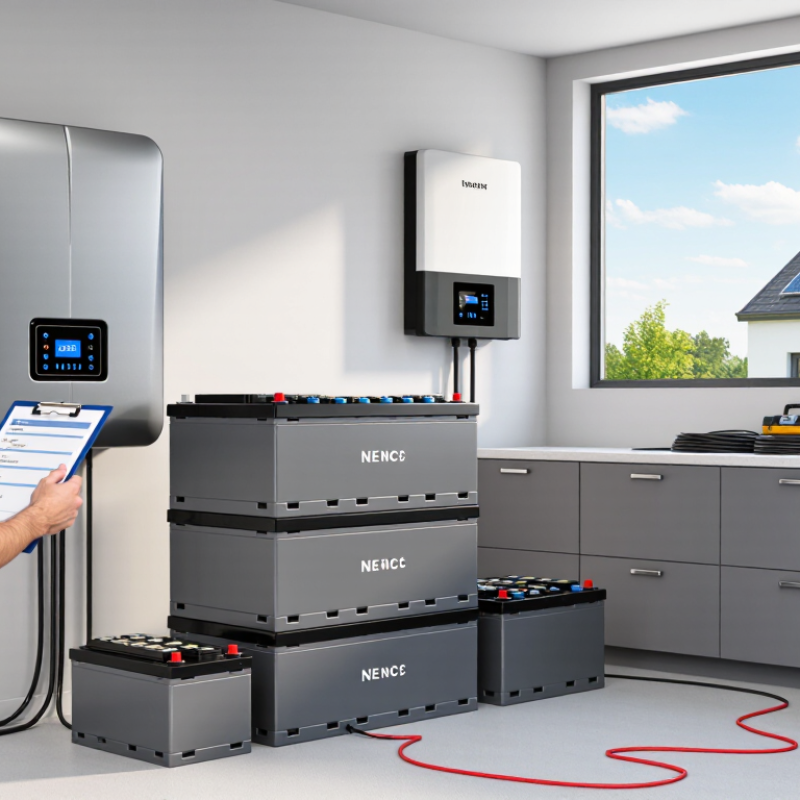
A solar panel sends direct-current electricity to a charge controller, which regulates charging and protects the battery from unsafe voltage. Inside a lithium-ion cell, lithium ions move between electrodes during charging; during discharge, their movement releases electrical energy. The battery stores energy chemically, not as a tank of ready-to-use electricity. A hybrid inverter then converts stored DC power into AC for household appliances.

Small detail, big difference.

Battery chemistry affects everyday performance. Lithium iron phosphate (LFP) is often considered for stationary solar storage because of its thermal stability and long cycle life. But system design matters too: usable capacity, temperature, charge limits, and inverter compatibility all shape what a household actually receives.

NREL’s 2024 Annual Technology Baseline uses about 85% round-trip efficiency as a representative utility-scale battery assumption; a real home system can differ. That number is a model input, not a promise.

Storage also helps shift solar power from bright afternoon hours to evening use, when panels produce little or nothing. The IEA’s Batteries and Secure Energy Transitions report says power-sector battery storage additions reached 42 GW in 2023, more than double 2022. That growth signals a changing grid, but it does not mean every home needs the same battery.

A neat sizing spreadsheet can miss cloudy weeks, a new appliance, or changing habits. Real homes are messier.

Which Lithium Battery Chemistries Are Used in Solar Systems?

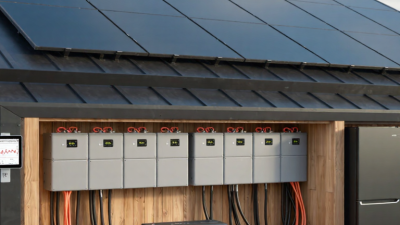
Lithium iron phosphate, or LFP, is a common chemistry for home solar storage. It is valued for long cycle life and strong thermal stability, though the complete battery still needs proper controls. Its lower energy density can mean a larger, heavier cabinet for the same stored energy. Space matters.

Nickel manganese cobalt, or NMC, stores more energy in a compact volume, which can suit installations with limited floor space. Its performance and lifespan vary with cell design, temperature, and charging habits; chemistry alone cannot predict service life. Lithium titanate, or LTO, can handle frequent cycling and high charge rates, but often costs more and stores less energy per kilogram. Not every system needs those strengths. For any chemistry, check that the battery management system, inverter, and charging limits are compatible. Cold garages, hot utility rooms, and repeated deep discharges can change real-world results. I would compare usable capacity, warranty conditions, operating-temperature range, and safety documentation—not just the chemistry label. One detail is easy to overlook: installation quality still matters.

2026 Best Lithium Battery for Solar Systems: Which Chemistry?

Indicative cycle-life ranges to about 80% of initial capacity: LFP (lithium iron phosphate), 3,000–6,000 cycles; NMC (nickel manganese cobalt), 1,000–3,000; and LTO (lithium titanate), 10,000–20,000. Actual life varies with cell design, temperature, depth of discharge, charge rate, and operating conditions. LFP is commonly selected for stationary solar storage; compare warranty and system requirements when choosing.

What Factors Determine a Solar Battery’s Performance and Lifespan?

A solar battery’s performance depends on more than its chemistry. Cell quality, usable capacity, inverter compatibility, and the battery management system all affect how much stored power reaches your home. Round-trip efficiency measures how much energy survives charging and discharging. NREL’s 2024 Annual Technology Baseline uses 85% round-trip efficiency and a 15-year life as assumptions for utility-scale lithium-ion storage. These are planning benchmarks, not promises for a household battery. Heat matters. A battery installed beside a hot garage wall may age faster than one kept in a stable, ventilated space.

Depth of discharge, charge rate, and daily cycling also shape lifespan. Regularly draining a battery to its limit can add stress; reserve settings help, though they reduce immediately available energy. A good battery management system monitors cell voltage and temperature, but it cannot undo poor installation or persistent overheating. Check the warranty’s capacity-retention terms and cycle limit, then compare them with your actual evening use. NREL’s figures describe grid-scale systems, so applying them directly to rooftop solar requires care. That distinction is easy to miss. Real-world life also varies with climate, usage, and maintenance, and published averages may not reflect a particular home.

How Do LFP and NMC Batteries Compare for Solar Storage?

For home solar storage, LFP and NMC batteries make different trade-offs. LFP uses lithium iron phosphate chemistry; NMC combines nickel, manganese, and cobalt. LFP generally offers strong thermal stability and long cycle life, while NMC stores more energy in a smaller, lighter package. That compactness can matter where floor space is tight, but it may matter less in a garage. No chemistry is risk-free, and installation quality still counts.

BloombergNEF’s 2023 battery price survey reported average pack prices of about $130 per kilowatt-hour for LFP and $152 for NMC. These are battery-pack averages, not installed home-system quotes; inverters, controls, labor, and local conditions change the final price. For a daily solar cycle, compare usable capacity, warranty terms, temperature limits, and expected lifetime energy—not just the purchase price. I would not treat chemistry as a verdict. A poorly matched system can disappoint either way.

Tips: Ask for the usable, not nominal, capacity. Check whether the warranty states a cycle limit or lifetime energy throughput. Then compare quotes using the same storage capacity and backup-power needs.

How to Match a Lithium Battery to Your Solar System and Usage Needs?

Matching a lithium battery to a solar system starts with your actual daily energy use, not the largest capacity you can afford. Start with real loads. Check appliance labels or a plug-in meter, then estimate how many hours each device runs. A fridge, lights, and a laptop may use far less energy than an electric heater. Add a reserve for cloudy days, but avoid sizing from guesswork alone.

Next, compare the battery’s usable capacity with your daily needs. If your essential loads use about 2 kilowatt-hours each day, a battery rated at 2 kilowatt-hours may not provide that much usable energy. Review the manufacturer’s usable-capacity figures and recommended depth of discharge. Also match the battery’s voltage and continuous power output to the inverter. A system can have ample stored energy yet still struggle with a pump’s startup surge.

For many home solar systems, lithium iron phosphate batteries are valued for their cycle life and thermal stability, though suitability depends on the installation. Check that the battery management system supports the inverter’s charging limits and communicates correctly with it. Cold matters, too. Some batteries restrict charging below certain temperatures, so an unheated garage may need extra planning. I would leave room for imperfect estimates: household use changes, and winter solar production can be lower than expected.