Top 10 Advantages of Stacked Lithium Batteries for Energy Storage?
In recent years, the demand for efficient energy storage solutions has surged. Stacked Lithium Batteries have emerged as a leading candidate in this space. According to a report by Grand View Research, the global lithium-ion battery market is expected to reach $139.67 billion by 2026. This growth signifies a shift towards more sustainable energy practices.
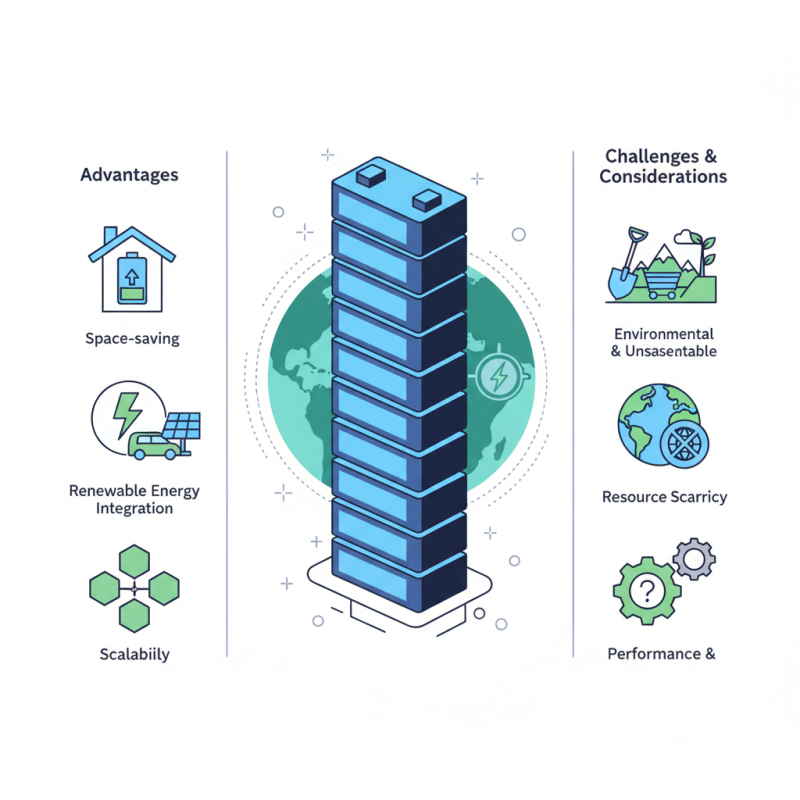
Stacked Lithium Batteries offer a compact design, allowing for increased energy density. This means they can store more energy in less space, which is crucial for applications like electric vehicles and renewable energy integration. Moreover, their modular design facilitates easy scalability. This flexibility can help address varying energy demands effectively.
However, as with any technology, challenges exist. The production of Stacked Lithium Batteries raises concerns about environmental impact. Sourcing lithium and other materials can lead to unsustainable mining practices. Balancing performance with sustainability presents a critical reflection point for the industry. As we explore the advantages of Stacked Lithium Batteries, it is essential to weigh these benefits against potential drawbacks.
Benefits of Compact Design in Stacked Lithium Batteries
The compact design of stacked lithium batteries presents notable advantages. Their space-saving structure allows for efficient energy storage in limited environments. This feature is essential for urban settings where availability of space is a challenge. By maximizing vertical space, these batteries enhance storage capacity without the need for extensive floor area.
Another key benefit is their lightweight composition. Lighter batteries ease installation and reduce transportation expenses. This is especially useful in portable energy applications. However, while compact, one must ensure that safety measures are not compromised. The stacking method requires careful engineering to prevent overheating or malfunctions, which could lead to operational issues.
Additionally, the modularity of stacked designs facilitates easy maintenance. It allows users to replace individual modules without needing to replace the entire battery system. This can save time and resources. Yet, balancing performance with safety remains a crucial point for manufacturers. Continuous improvement is needed to address these challenges while reaping the benefits of compact designs. The future of energy storage holds promise, but there is always room for thoughtful reflection and development.
Enhanced Energy Density and Storage Capacity of Stacked Lithium Batteries
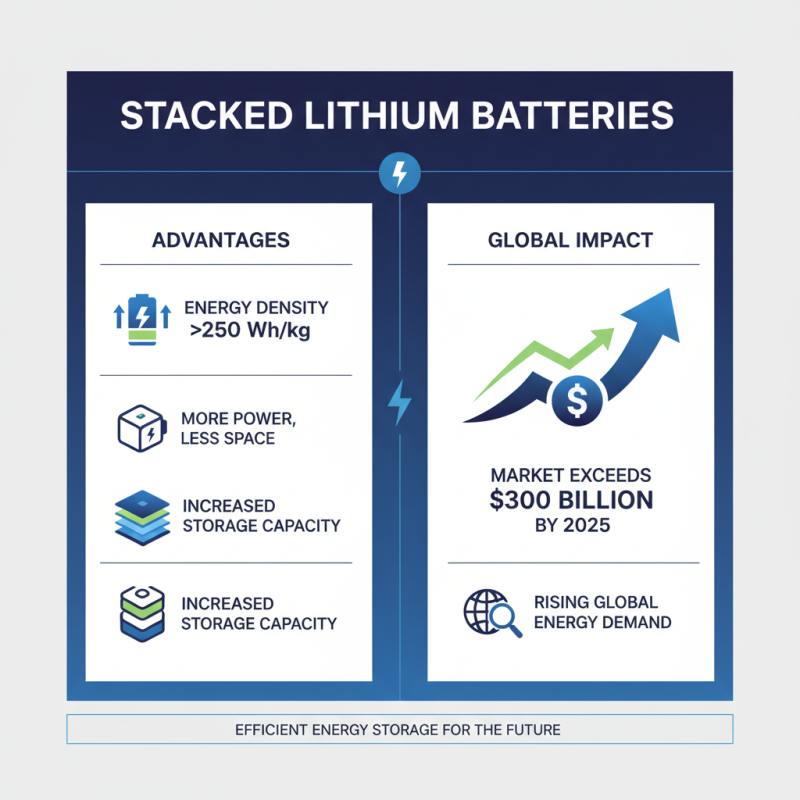
Stacked lithium batteries offer significant advantages, particularly in energy density and storage capacity. These batteries can achieve energy densities of over 250 Wh/kg. This allows for more electricity to be stored in a compact format. As global energy demands rise, the need for efficient storage solutions is critical. Industry reports indicate the global market for lithium batteries could exceed $300 billion by 2025.
One of the standout features of stacked lithium technology is modularity. Batteries can be added or removed based on the specific needs of a project. This flexibility enhances efficiency and reduces waste. Additionally, the compact design allows for optimized use of space in energy installations. This is crucial in urban settings where space is at a premium.
**Tip:** Consider the thermal management of your battery system. Proper cooling can enhance longevity and performance.
Despite their benefits, there are challenges. The complexity of stacked systems can lead to issues in maintenance and reliability. Over time, some cells may degrade faster than others, affecting overall performance. Regular monitoring is essential to maximize the benefits of these systems.
**Tip:** Implement a battery management system to track the health and performance of each cell. This can prevent costly failures.
Improved Thermal Management in Stacked Lithium Battery Systems
Improved thermal management in stacked lithium battery systems is a significant advantage. These batteries are designed to handle heat more effectively. As they operate, heat can accumulate, leading to performance issues. Efficient thermal regulation ensures the batteries maintain optimal performance levels.
Cooling mechanisms integrated into the design help in dissipating heat. This prevents overheating, particularly during intensive discharge cycles. Proper airflow and thermal interfaces are crucial. Yet, with complex stacking, heat distribution can sometimes be uneven. This is a challenge that manufacturers must address continuously.
While stacked lithium batteries offer thermal benefits, there are limitations. The intricacy of the design may lead to unforeseen thermal hotspots. Regular monitoring is essential to identify potential risks. Innovations are ongoing, but the balance between performance and safety needs reflection. For users, understanding these nuances is vital for optimal energy storage performance.
Cost-Effectiveness of Stacked Lithium Batteries for Energy Storage Solutions
When considering energy storage solutions, cost-effectiveness is vital. Stacked lithium batteries deliver on this front. They provide high energy density, meaning more power in a smaller space. This efficiency translates into lower installation costs. Fewer units are required to store the same amount of energy.
However, initial costs can still be a concern. Buyers may hesitate, facing higher upfront prices compared to traditional batteries. Over time, the savings in energy bills can offset these expenses. Additionally, stacked lithium batteries have longer lifespans. They reduce the need for replacements, further enhancing their cost benefits.
Maintenance costs are often lower too. Lithium batteries require little upkeep. This factor allows users to focus on utilization rather than repairs. Still, it's crucial to consider the performance in diverse conditions. They may underperform in extreme temperatures. Evaluating these aspects is essential for potential buyers. Balancing initial costs with long-term savings is a complex task.
Versatility of Stacked Lithium Batteries in Various Applications
Stacked lithium batteries offer impressive versatility in energy storage applications. These batteries can adapt to various environments. They perform well in residential systems, commercial setups, and even electric vehicles. Their compact design allows for effective space utilization. This feature is crucial for urban areas where space is limited.
In renewable energy integration, stacked lithium batteries shine brightly. They easily store excess energy from solar or wind systems. This stored energy can then power homes or businesses during off-peak hours. However, the installation process may require expert help. A poor setup can lead to efficiency loss.
Tip: Always consult with professionals for installation. It's vital to match battery capacity with your energy needs.
Another application is in portable devices. Stacked lithium batteries keep gadgets lightweight. They provide adequate power without adding bulk. Still, their performance can vary based on temperature. High heat can decrease efficiency. Users need to protect their devices from extreme conditions.
Tip: Store devices in cool, dry places to prolong battery life. Consider your usage environment when selecting batteries.
With growing innovations, the future looks bright for stacked lithium batteries. They are reliable and adaptable, but mindful usage ensures longevity.
Top 10 Advantages of Stacked Lithium Batteries for Energy Storage
This bar chart illustrates the top 10 advantages of stacked lithium batteries for energy storage. Each advantage is represented as a percentage reflecting its importance and effectiveness in various applications.