What Is a 48V LiFePO4 Server Rack Battery?
A 48v Lifepo4 Server Rack Battery is a modular energy-storage unit designed for data centers, network rooms, and backup power systems. It combines 16 lithium iron phosphate cells into a nominal 48-volt battery pack. Inside, a battery management system monitors voltage, temperature, current, and cell balance. That quiet circuit protects the rack.
Battery expert Dr. Haresh Kamath of the Electric Power Research Institute has explained, “Energy storage is not a single technology; it is a portfolio of technologies designed for specific applications.” His point fits server batteries well. A rack battery is not chosen by voltage alone. Capacity, discharge rate, cabinet space, cooling, communication protocols, and maintenance access also matter. A 5 kWh pack may support a small network cabinet, while several parallel modules can protect larger server loads during an outage. The numbers matter.
This article will examine how a 48v Lifepo4 Server Rack Battery works, where it fits, and what buyers should inspect before installation. We will discuss LiFePO4 chemistry, rack compatibility, usable capacity, cycle life, and safety features. We will also look at CAN or RS485 communication, because a battery without reliable data can become a blind spot. That is easy to overlook.
There is one practical weakness worth admitting. Published cycle-life figures often assume ideal temperature and controlled discharge conditions. Real server rooms are less perfect. Heat, rapid charging, aging cells, and poor configuration can reduce performance. Understanding those limits leads to better battery selection and more dependable backup power.
What Is a 48V LiFePO4 Server Rack Battery?
What Is a 48V LiFePO4 Server Rack Battery?
A 48V LiFePO4 server rack battery is a rechargeable energy storage unit designed for data centers, network cabinets, and backup power systems. “48V” is usually a system label, not an exact voltage. A typical battery uses sixteen 3.2V lithium iron phosphate cells, creating a nominal voltage near 51.2V. Its battery management system monitors temperature, current, cell balance, and protection limits.
LiFePO4 chemistry offers strong thermal stability and a long service life. Sandia National Laboratories reports lithium-ion systems can achieve about 85%–95% round-trip efficiency, depending on design and operating conditions. The International Energy Agency’s 2024 Batteries and Secure Energy Transitions report also highlights the growing role of batteries in reliable electricity systems. However, performance changes with heat, charging habits, cable losses, and poor ventilation. A server battery is not automatically safe because it uses lithium iron phosphate.
Tips: Check the inverter’s voltage range before installation. Confirm continuous discharge current, usable capacity, rack depth, and communication compatibility. Keep the battery in a dry, temperature-controlled room. Follow IEC 62619 and UL 1973 guidance where applicable. Do not judge backup time from amp-hours alone; usable watt-hours provide a clearer estimate.
In practice, a 5.12kWh battery may not deliver all 5.12kWh to connected equipment. Reserve settings and conversion losses reduce available energy. That detail is easy to overlook. Some specifications also seem impressive but lack test conditions, so independent verification remains necessary.
How a 48V LiFePO4 Battery Works in Server Rack Systems
What Is a 48V LiFePO4 Server Rack Battery?
How a 48V LiFePO4 Battery Works in Server Rack Systems
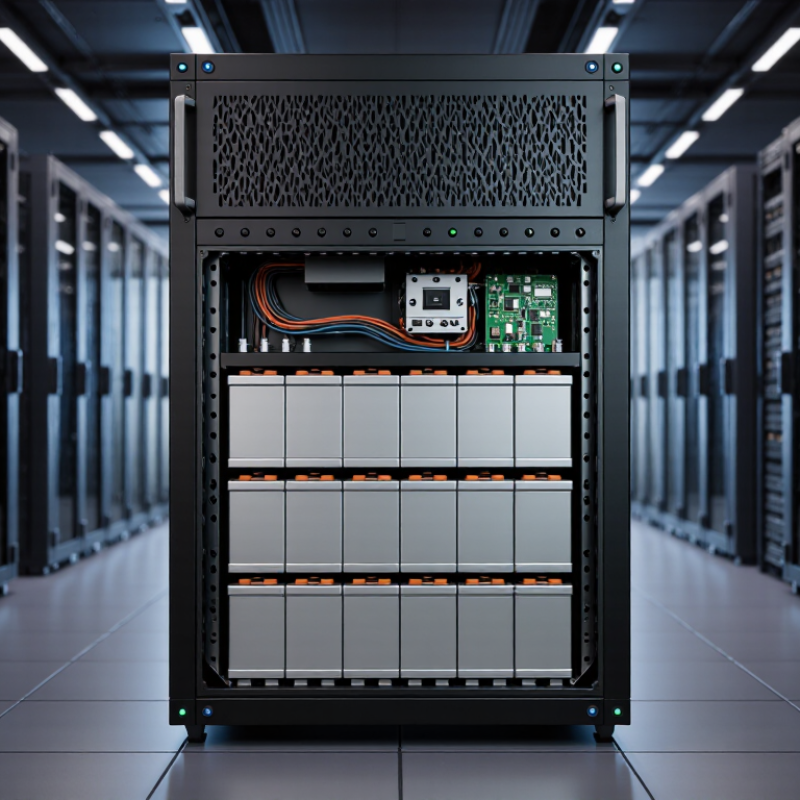
A 48V LiFePO4 server rack battery normally uses sixteen cells connected in series. Each cell supplies about 3.2 volts, creating a nominal 51.2V battery pack. The pack feeds an inverter, UPS, or DC distribution system through protected terminals. In practical installations, the battery cabinet slides into a rack and connects to shared busbars. Clean wiring matters.
Inside the battery, a battery management system monitors cell voltage, temperature, current, and state of charge. It can stop charging when a cell reaches its limit. It can also disconnect the load during severe overcurrent or low-voltage conditions. Cell balancing helps keep the series cells aligned. However, balancing cannot repair a weak or damaged cell.
During commissioning, technicians should verify cable size, terminal torque, ventilation, and communication settings. A fully charged 16-cell pack may reach about 58.4V, depending on the charging profile. Server equipment must accept this range. Charging below freezing can damage the cells, so temperature protection is essential. LiFePO4 chemistry offers stable thermal behavior and long cycle life, but it is not maintenance-free. A rack may look orderly while poor settings quietly reduce capacity. State-of-charge readings can also drift, especially after shallow cycling. Regular inspection remains necessary.
Key Components and Technical Specifications
What Is a 48V LiFePO4 Server Rack Battery?
Key Components and Technical Specifications
A 48V LiFePO4 server rack battery usually contains sixteen cells in series. Each cell has a nominal voltage near 3.2V, creating a 51.2V pack. A 100Ah model therefore stores about 5.12kWh before conversion losses. The IEA’s 2024 Batteries and Secure Energy Transitions report says global energy storage capacity must expand sixfold by 2030. That growth increases demand for compact, serviceable battery systems.
The battery management system, or BMS, is the control center. It monitors cell voltage, temperature, current, balancing, and charging limits. A reliable BMS should provide overcharge, over-discharge, short-circuit, and thermal protection. Communication commonly uses CAN or RS485 for inverter and monitoring integration. The enclosure typically includes busbars, terminal covers, a circuit breaker, cooling paths, and rack-mount hardware. Small details matter.
Technical specifications need careful reading. Continuous current may be 50A, while peak current lasts only seconds. Cycle-life figures often assume shallow discharge, controlled temperature, and reduced charging rates. That assumption is convenient, but incomplete. IEC 62619 provides safety requirements for industrial lithium secondary cells and batteries, yet certification does not replace proper installation. LiFePO4 chemistry generally offers strong thermal stability, but it is not risk-free. In field testing, poor cable torque, blocked ventilation, or mismatched firmware can create avoidable faults. A practical design should verify usable energy, ambient temperature, communication compatibility, and warranty conditions before deployment.
Installation, Maintenance, and Safety Considerations
What Is a 48V LiFePO4 Server Rack Battery?
Installation, Maintenance, and Safety Considerations
A 48V LiFePO4 server rack battery usually operates at 51.2V nominal. Check this detail before connecting an inverter, charger, or distribution panel. Confirm voltage ranges, communication protocols, and maximum charging current. A mismatch can damage equipment or trigger repeated BMS shutdowns.
Install the battery in a clean, dry, and stable rack. Leave space around vents and service panels. Use correctly sized cables, secure lugs, and a properly rated fuse or breaker. Tighten terminals to the manufacturer’s specified torque, not by guesswork. Keep polarity visible. Always isolate the battery before wiring, and use insulated tools and suitable protective equipment. A neat cable route is not proof of a safe system.
Maintenance should include visual checks, terminal inspections, and recorded voltage and temperature readings. Look for swelling, unusual odor, loose connections, or heat near the terminals. Keep the battery within its approved temperature range, especially during charging. Review BMS alarms instead of repeatedly resetting them. That habit hides faults. Firmware updates should follow approved procedures and preserve configuration records. A qualified electrician should verify grounding, overcurrent protection, and local code compliance before energizing the rack. Even experienced installers can miss a small connection problem. Stop work when readings seem abnormal.
What Is a 48V LiFePO4 Server Rack Battery?
A 48V-class LiFePO4 battery normally uses 16 cells in series, giving a nominal voltage of 51.2V. The chart shows common electrical reference points for installation and safety planning. Actual charge limits and cutoff values must always follow the battery manufacturer's BMS specifications.
Installation
Use correctly rated DC cables, overcurrent protection, secure rack mounting, and adequate airflow. Confirm polarity before connection.
Maintenance
Inspect terminals, connectors, enclosure condition, and battery telemetry regularly. Keep the battery clean, dry, and within its specified temperature range.
Safety
Do not bypass the BMS, short-circuit the terminals, or charge a battery outside its approved temperature and voltage limits.