2026 Top Off Grid Lithium Battery Options for Your Home?
As energy independence gains popularity, homeowners are increasingly turning to Off Grid Lithium Battery solutions. According to the International Energy Agency, the global market for off-grid renewable energy systems is expected to grow significantly, with a projected increase of 52% by 2026. This growth is driven by a need for reliable, sustainable energy sources. Off-grid systems not only reduce dependency on traditional grids but also enhance energy security.
In 2026, the options for Off Grid Lithium Battery systems continue to expand. These batteries offer improved efficiency and longevity compared to traditional lead-acid alternatives. For example, many lithium batteries can last up to 10 years, with a discharge cycle that often exceeds 5000 cycles. Yet, they come with their own sets of challenges. The initial investment can be quite high, creating a barrier for some homeowners. Additionally, they depend on temperature variations which might affect their performance.
Moreover, the adoption of Off Grid Lithium Battery technology raises broader questions. Are homeowners fully aware of the maintenance needs? Do they have the knowledge to install and manage these systems effectively? Reflecting on these points is crucial. As we explore the best options available, we must consider both the benefits and the complexities of integrating Off Grid Lithium Batteries into our homes.

Top Features to Consider When Choosing Off Grid Lithium Batteries
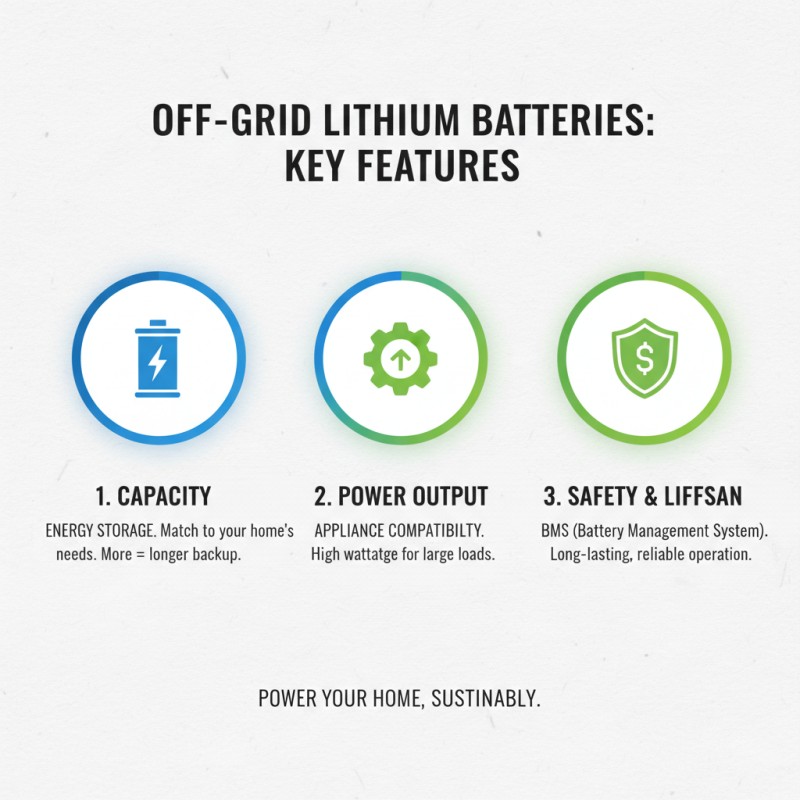
When selecting off-grid lithium batteries for your home, consider key features carefully. Battery capacity is crucial. It indicates how much energy you can store. Choose a battery with a capacity tailored to your energy needs. Larger capacity means more flexibility during overcast days or power shortages.
Another important aspect is the cycle life. This defines how many charge and discharge cycles the battery can handle. A longer cycle life can save you money in the long run. It also means fewer replacements. Look for batteries rated for 3,000 cycles or more.
**Tip:** Check for temperature tolerance. Some batteries perform poorly in extreme temperatures. If you live in a place with harsh weather, this feature is vital.
Weight and size matter too. Off-grid setups often have limited space. A compact battery can be easier to install and manage. Think about your setup’s footprint.
**Tip:** Monitor the discharge rate. A battery that discharges slowly can make a huge difference in performance.
Reflecting on the trade-offs is important. Higher capacity batteries can be pricier. It's essential to balance budget and performance. Don't rush your decision; take time to evaluate your options.
Comparative Analysis of Leading Lithium Battery Brands for Off Grid Use
The demand for off-grid lithium batteries has surged as more homeowners prioritize energy independence. Recent industry reports indicate a projected annual growth rate of over 20% in the off-grid battery market through 2026. This rapid expansion emphasizes the importance of understanding the best options available.
When evaluating leading brands, key factors include energy density, lifespan, and discharge rates. Research suggests that advanced lithium technology can yield about 2000 to 5000 cycles, significantly extending battery life compared to traditional lead-acid alternatives. This means fewer replacements and lower long-term costs. However, users often overlook the environmental impact of battery disposal. Recycling programs are not universally available, leading to potential waste issues.
Capacity ratings can also be misleading. Some batteries may promote high capacity but fail under real-world conditions, especially during peak usage times. A recent consumer survey highlighted that 30% of users experienced performance drops within the first year. Such discrepancies indicate the need for thorough research and personal testing before making significant investments. Each homeowner's needs differ, making it essential to evaluate all options carefully.
Cost-Effectiveness: Understanding Investment vs. Long-Term Savings
Investing in off-grid lithium batteries can be a complex decision. Many homeowners seek to reduce reliance on the grid, yet understanding the financial aspect is crucial. According to a report by EnergySage, the average cost for a lithium battery system ranges from $7,500 to $15,000. This upfront cost can be intimidating. However, these systems often lead to significant long-term savings.
Homeowners may save up to 60% on electricity bills after installation. The initial investment might seem high, but with solar integration, peak shaving, and emergency backups, the long-term benefits become clearer. A study from the National Renewable Energy Laboratory (NREL) indicates that off-grid systems can pay for themselves within 5 to 10 years, depending on energy consumption patterns.
Despite the advantages, some challenges remain. Battery performance can degrade over time, leading to additional costs for replacements. Moreover, the technology is still evolving, and today’s best options may not be ideal in a few years. Consumers must weigh these factors carefully. Understanding the balance between initial investment and future savings is key to making an informed decision.
Best Practices for Installing and Maintaining Off Grid Lithium Batteries
Installing off-grid lithium batteries requires attention to detail. Proper installation ensures safety and efficiency. Start by assessing your energy needs. Calculate daily usage in kilowatt-hours (kWh). This guides you in choosing the right battery capacity. According to a recent industry report, the average off-grid home uses about 30 kWh per day. Consider this when planning your setup.
Ensure the batteries are installed in a temperature-controlled environment. Extreme temperatures can reduce battery life by as much as 20%. Routine maintenance starts with checking connections and monitoring charge cycles. Over time, cells can degrade, impacting performance. Keeping a log helps track usage patterns and battery health.
Remember, no installation is without challenges. You may face issues with capacity or charging rates. It’s essential to review these areas regularly. An annual check-up can prevent bigger problems down the line. Strive for continuous improvement in your off-grid system. Embrace the learning process, even when issues arise.
2026 Top Off Grid Lithium Battery Options for Your Home
| Battery Type |
Capacity (kWh) |
Cycle Life |
Warranty (Years) |
Weight (lbs) |
Price (USD) |
| Lithium Iron Phosphate |
10 |
3000 |
10 |
100 |
3000 |
| Lithium Nickel Manganese Cobalt |
15 |
2500 |
8 |
120 |
4500 |
| Lithium Cobalt Oxide |
8 |
2000 |
5 |
90 |
3500 |
| Lithium Polymer |
12 |
3000 |
6 |
80 |
4000 |
Future Trends in Off Grid Lithium Battery Technology for Homes
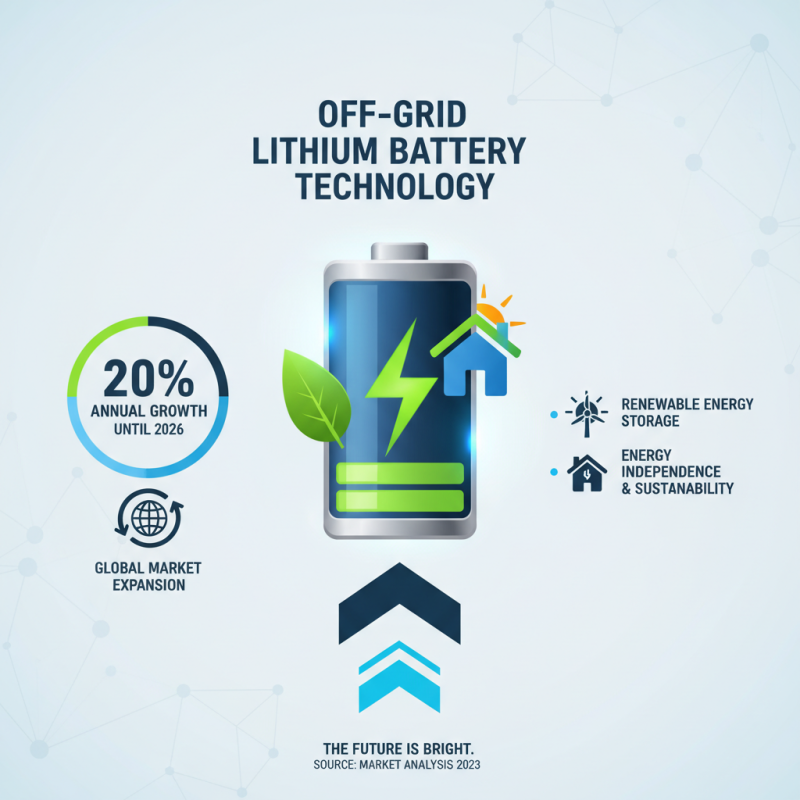
The future of off-grid lithium battery technology is very promising. According to a recent market analysis by a reputable research firm, the global lithium battery market is expected to grow by over 20% annually until 2026. This trend is driven by increasing demand for renewable energy storage solutions. Many homeowners seek energy independence and sustainability.
Innovations in battery chemistry are underway. Solid-state batteries are gaining attention for their higher energy density and safety. Reports indicate they could increase efficiency by 30%. However, challenges remain. Manufacturers are still facing issues with production scalability and material costs. These factors can hinder the rapid adoption of new technologies.
Integration with renewable sources like solar is a key trend. Recent studies show that combining solar panels with advanced lithium batteries can significantly reduce energy costs. However, not all systems are compatible. Homeowners must carefully consider the specifications of their equipment. The growing array of options can sometimes create confusion, making research essential. There is a balancing act between innovation and practicality, and finding the right solution can take time.